Approve a zip-front sports bra sample by checking whether the wearer can start, close, and move in the bra with the front guard in place.
Last updated:
How do you approve a zip-front sports bra sample?
Test a zip-front sports bra sample first off the body and then on the intended wearer. Check whether the starter feeds correctly, the slider travels without catching the lining, and the guard stays between the hardware and skin. Repeat the intended movements and record where any snag, separation, or pressure occurs.
Decide how the style is meant to open. For a fully separating zipper, show the starter and retaining box in the construction drawing. If the design includes an inner hook, specify when it is engaged and whether the wearer can reach it. Fitclo’s zip-front development guide discusses the front opening and related closure options. The approval method below uses the materials, opening, and support level planned for your own range.
Mark the points where the closure meets the body
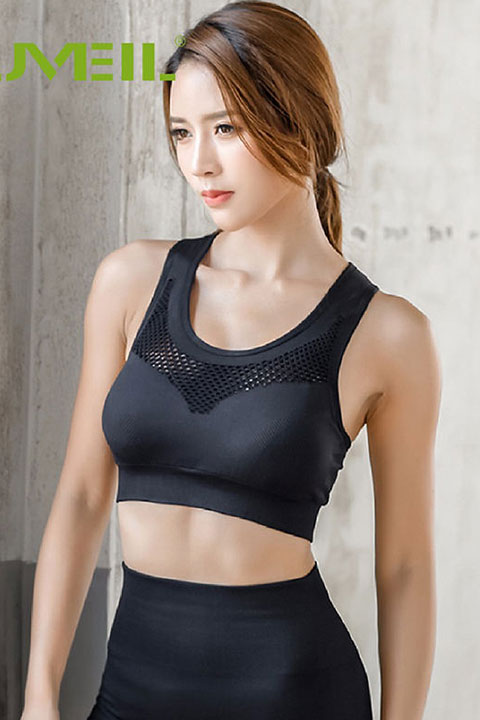
Draw the top stop, bottom hardware, stitch lines, inside guard, and where the lower band crosses the front. Label the intended coverage at both ends instead of writing “soft backing.” The black style in our sportswear catalog shows how a broad lower band meets the center front. On a front-opening version, that junction needs a separate check because the zipper and guard run across the band. Use the catalog image to place marks on the drawing, then inspect the actual closure on the approved construction.
On a table, close and open the sample without pulling on the cups or the band. Watch whether the guard is held away from the moving slider and whether the zipper hangs straight when the sample is relaxed. YKK’s guide to choosing a wearable zipper is a starting point for specifying the component. Keep the component code in the sample record so the supplier can identify a substitution.
What if it closes on the table but catches during wear?
Start with the wearer standing comfortably in the planned size and follow the intended order for any inner hook and outer zipper. Record whether the wearer can see and hold the starter and move the slider without pinching the guard between the chain and the front body. If the sample slides smoothly off the body but catches when worn, check band and cup tension and where the lining lies while the front is pulled into position. Repeat on a size where the grade changes the length or shape of the front opening.
- The bottom will not start. Check that the two halves meet without twisting, then assess whether the band or an inner hook is drawing them out of position.
- The lining snags midway. Mark the snag point on the sample and compare its guard width, free edge and stitch position with the rest of the opening.
- The top stop presses when the wearer bends. Check neckline clearance and guard coverage in that posture before moving the hardware or revising the facing.
- The chain separates or the puller moves during use. Hold approval and record the movement, size, and exact component for a construction and supplier review.
Our zipper guard construction guide gives background on lining position. If the bra also has removable pads, keep the removable pad approval separate so shifting cup coverage does not get mistaken for a zipper fault.
Repeat the checks after the planned care cycle
Use the wash and dry conditions proposed for that garment. Compare the same sample points before and after care, then repeat the closure and motion checks. AATCC’s garment dimensional-change method covers length and width after home laundering and notes limitations for some stretch fabrics. If you need lab measurements, agree on the suitable method. Take separate fit notes for waviness, guard curl, and where the wearer feels the stop or puller.
The approval record should include the sample size, hardware reference, guard material, care conditions, and photo of the point under load. If a change improves access but changes the band feel, check fit again before signing off. Use the intended support and movement when planning the trial with a sportswear manufacturing partner.
Front closure questions
Does every front-zip bra need an inside hook?
The intended opening and band tension determine whether the hook helps. If used, trial the whole closure sequence on the wearer. A front zipper can serve a different role in different constructions, as the Fitclo development guide illustrates.
Can component approval stand in for a fit test?
Use the zipper specification to check what was supplied. Use the assembled sample to check guard clearance and operation during wear. Review YKK’s wearable zipper guidance for component considerations.
What if the bra passes the fit check before washing?
Repeat after the agreed care. Dimensional testing addresses a different question from closure operation, as the scope of AATCC’s garment method shows.