Check full-zip hoodie pocket alignment by measuring both sides from the same points and isolating whether a visible step comes from sewing, the zipper, or care.
Last updated:
How do you check full-zip hoodie pocket alignment?
For full-zip hoodie pocket alignment, zip the sample and lay it flat without stretching the front. Compare corresponding pocket openings against a shared baseline. Then check both sides with the zipper open. Record whether the step is present in both conditions or appears only when the panels are joined.
UNIT-100’s full-zip hoodie page describes the divided front and split pocket. Our zipper and pocket construction guide also calls for checking a closed sample. Start that check with part drawings that identify which endpoints should match rather than relying on a general instruction to align both pockets.
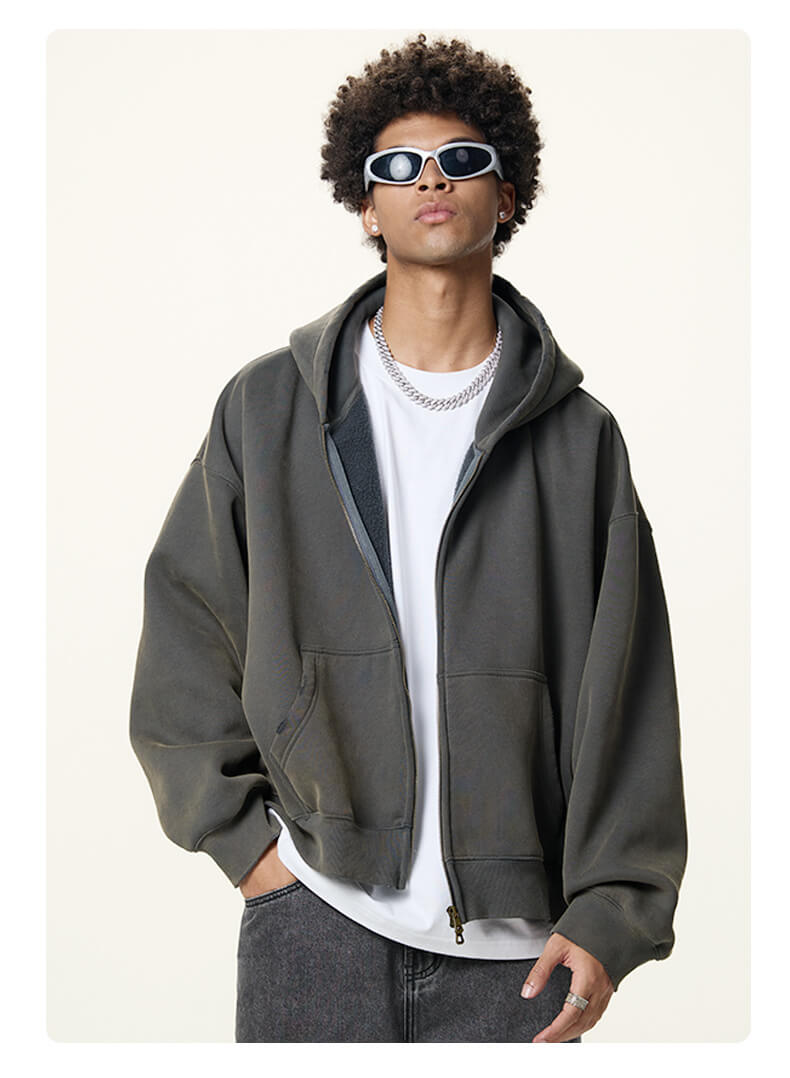
Use reference points that stay visible on the finished front
Choose a reference that the inspector can find on both sides, such as the body-to-hemband seam on a level front. If the hem is intentionally angled, use a defined horizontal baseline from the pattern drawing instead. Mark center front and show which upper and lower points define the pocket opening. Measure from the same landmark to each corresponding point, then compare opening angle and distance from the center line. Agree on a tolerance and measuring method before inspecting the size set.
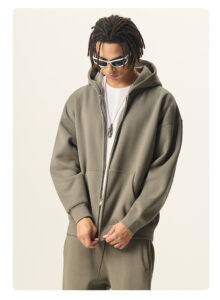
Our two-way zip fleece hoodie is an example of a front with zipper hardware at both ends. If your sample uses two sliders, specify the normal closed position on the inspection sketch. Keep the zipper fully engaged in that position before comparing the two sides. Leave the folded pocket bags in their natural position so their shape does not distort the front panel.
Why can the same pocket look level open and uneven closed?
Measure both fronts with the zipper open and the fabric relaxed. If one pocket remains off the agreed marks, compare the corresponding pocket placement on the cutting and sewing records. If each half measures correctly open but the step appears closed, check whether the front lengths, zipper insertion, or hemband attachment are drawing the two sides in different directions.
| Observation | Check next | Production note |
|---|---|---|
| Same step open and closed | Pocket endpoint and pattern marking on each front | Specify which side and which point to correct. |
| Step appears only when zipped | Matching front length and tape position | Keep the pocket pattern until the front join is checked. |
| Pockets align flat but hands enter at different angles | Opening shape and how the pocket lies when worn | Check both hand entries on the same wearer. |
YKK’s wearable zipper guide helps identify component characteristics worth specifying. If the sample only goes out of alignment when closed, keep the zipper and panel measurements together so the supplier can determine which part of the assembly needs revisiting.
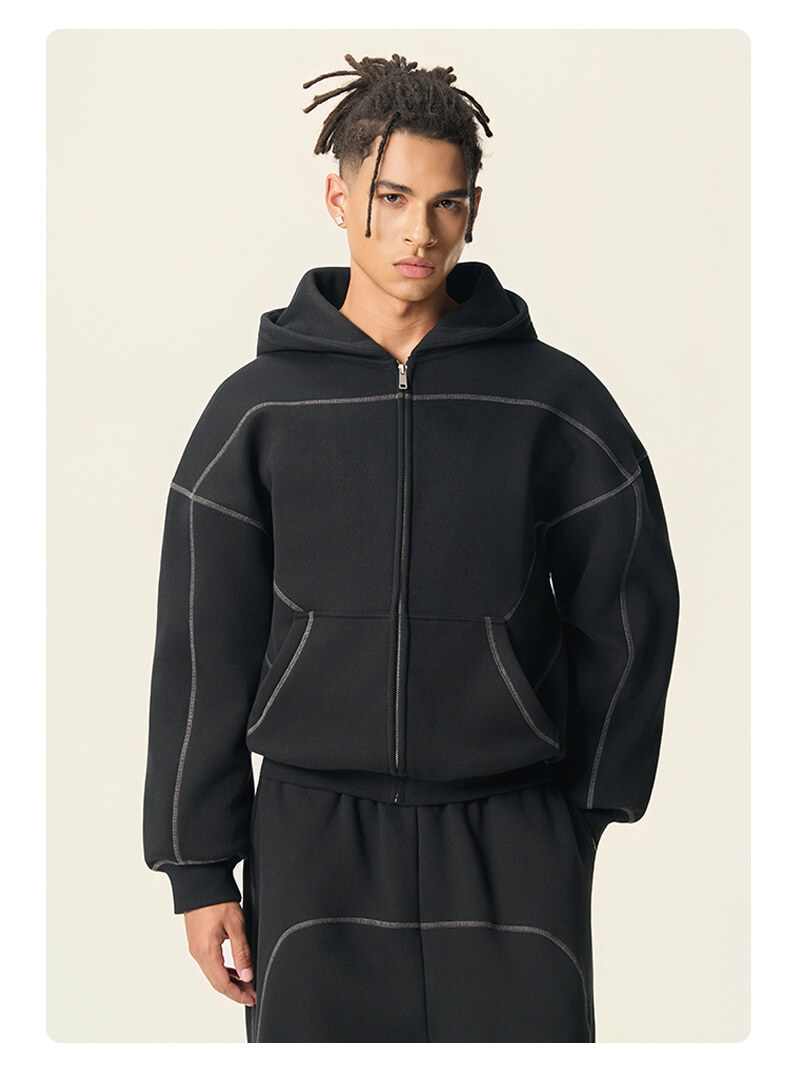
Check the finished sample again after care
Use the care process intended for the product. Mark the same measurement points before and after laundering and record whether the front or the pocket fabric changes. AATCC’s dimensional-change method for garments describes length and width assessment after home laundering. Pocket alignment, angle and hand access should also be recorded on the assembled sample.
For the pre-production reference, take an open front photo, an overhead closed photo and a worn photo in the approved size. Include the drawing revision, measurements and approved deviation if one was accepted. Our zip-up construction comparison gives context for choosing a different pocket route if the design cannot meet the intended look or use.
Write a correction the sewing line can use
Record which part is high or low, the baseline used, and the condition that produced the difference. For example, a sample note can state that both open fronts match the pocket drawing, but the right opening sits higher when the zipper is engaged. Ask for a front-length and tape placement check before moving either pocket. Photograph where the corresponding endpoints sit so the factory can check the revised front against the same specification.
If the style uses a print near the opening, compare the print alignment separately. A graphic that looks level across the zip can hide a pocket opening that sits high. Agree on which visual details are allowed to vary by size and confirm each marked point on the graded sample.
Questions about split pocket samples
Should every zip hoodie use a split kangaroo pocket?
Consider two separate pockets if a continuous front line is unnecessary. UNIT-100 describes the split-pocket construction for a zip hoodie, which is one design option.
Does the zipper part number resolve a visible step?
Record the part number and check how the zipper was installed on both panels. YKK’s component guide covers zipper selection, while the finished sample shows alignment.
Should the tolerance cover post-wash measurements too?
Say which condition the tolerance applies to and check the same points after care. Use the AATCC garment method as a reference for discussing dimensional-change testing with the supplier or lab.