
Modal fabric’s premium drape stems from its unique fluidity and weight, which allows it to contour and flow over the body’s curves without clinging or adding bulk. This creates a smooth, second-skin silhouette that is both flattering and luxurious, a key reason why top brands, including those partnered with Sino Finetex, choose it for high-end underwear and loungewear collections. The fabric’s ability to look expensive on the body is less about sparkle and more about its impeccable, effortless fit.
How Does Seamless Tech Adapt to Different Body Types with 360° Stretch?
What Makes the 2026 Seamless Polo & T-Shirt Series a Best-Seller?
Our Seamless Series is the hottest trend of 2026! With irritation-free, seamless construction, enjoy all-day smooth comfort. Breathable, moisture-wicking fabric keeps you cool and confident anywhere.What is fabric drape and why is it critical for underwear?
Fabric drape describes how a textile flows and falls under its own weight, a property dictated by fiber, yarn, and construction. For underwear, excellent drape is non-negotiable—it ensures the garment molds seamlessly to the body, eliminates unsightly bunching, and provides all-day comfort without restrictive tension. A fabric with poor drape can create awkward lines and a cheap, ill-fitting look.
Think of drape as the fabric’s vocabulary for communicating with the body. A stiff fabric shouts, creating rigid shapes that fight your natural form. In contrast, a fabric with beautiful drape, like modal, whispers, gently following every contour. This is why drape is the unsung hero of a premium silhouette; it’s the difference between underwear that you’re aware of and underwear that feels like a part of you. But what happens if the drape is *too* fluid? Practically speaking, that’s where construction and knit structure come in. At Sino Finetex, our ergonomic engineers don’t just select fabric—they engineer the garment’s cut and seams to harness modal’s drape. For instance, strategic placement of slightly denser knit panels in areas like the rear provides subtle support and shaping, preventing the garment from becoming too loose or saggy. It’s a precise balance. Pro Tip: When assessing a sample, hang it and observe the fold lines. Clean, soft folds indicate good drape; sharp, angular creases suggest a stiffer, less body-friendly fabric.
How does modal’s molecular structure create its signature fluidity?
Modal’s exceptional drape originates at the molecular level. Derived from beech tree pulp, its fibers have a smooth, circular cross-section and a high degree of polymerization, resulting in long, continuous filament fibers. This structure reduces surface friction between fibers, allowing them to slide against each other with minimal resistance, which translates directly into that luxurious, fluid hand-feel and weighty fall.
Beyond its smoothness, modal fibers are also highly hygroscopic, absorbing moisture efficiently. This might seem unrelated to drape, but it’s crucial. A fabric that wicks moisture maintains a consistent weight and interaction with the skin; it doesn’t become clammy or stiff with sweat, which can disrupt the clean silhouette. So, how does this play out in production? In our Sino Finetex facility, we’ve observed that not all modal is created equal. The key is in the spinning and finishing. We specify a controlled, mercerization-like process for our modal yarns that enhances their natural luster and strength without sacrificing suppleness. This proprietary finishing step, developed in-house, aligns the fibers for optimal smoothness. The result is a yarn that, when knit, produces a fabric with a consistent, heavy fluidity—unlike cotton, which can have a drier, more porous hand. For example, a standard cotton jersey might stand away from the body slightly, while our modal jersey will kiss the skin and flow downward, creating that coveted elongated and sleek line.
| Property | Modal | Standard Cotton |
|---|---|---|
| Fiber Surface | Smooth, round filament | Ribbon-like, twisted staple |
| Drape Coefficient (Lower is better) | ~25-35% | ~45-60% |
| Resulting Silhouette | Fluid, conforming, “liquid” | Softer structure, can add micro-bulk |
What knit constructions best showcase modal’s draping qualities?
To fully exploit modal’s drape, the knit construction must be chosen with intention. Single jersey and lightweight interlock are champions for this fiber, as their structures provide enough stability to hold shape while allowing the fabric’s inherent fluidity to dominate. These knits create a smooth, uniform surface that glides over the body.
However, simply knitting modal in a jersey isn’t enough. The real magic happens in the engineering of the knit parameters. At Sino Finetex, our R&D team meticulously calibrates stitch density, yarn tension, and loop length. A slightly looser, more relaxed knit can enhance drape for loungewear, giving a beautiful waterfall effect. Conversely, for performance-oriented underwear, a tighter, more resilient knit harnesses the drape for contouring without compression. Beyond basic constructions, we often employ advanced techniques like variable gauge knitting within a single garment. This allows us to place a denser, more supportive knit in the waistband and leg openings to prevent rolling, while the main body panel uses a lighter construction for maximum drape and comfort. Why does this matter for the end consumer? It means the underwear maintains its perfect silhouette whether you’re sitting, standing, or moving. A common pitfall for brands is using a knit that’s too dense, which stifles modal’s best quality.
Inside Sino Finetex: The Factory Trusted by Global Brands
Over 20 years of expertise, trusted by leading global brands worldwide. From premium fabrics to finished products — including underwear, loungewear, and sportswear — we deliver quality at every step.How does modal’s drape compare to cotton, polyester, and silk?
Modal occupies a unique sweet spot in the drape spectrum. It offers superior fluidity to cotton, better moisture management than silk, and a more natural, breathable feel than polyester. This balance makes it the ideal choice for everyday luxury in underwear, providing a premium silhouette without high maintenance.
Let’s break this down. Cotton, especially in staple form, has a more matte and textured surface. Its fibers are shorter and often twisted, creating a fabric with more “body” and air pockets. This gives cotton a lovely softness, but it can also add a tiny amount of visual bulk—it doesn’t fall with the same heavy, liquid grace as modal. Polyester can be engineered for excellent drape, but it often lacks breathability and can have a synthetic, slippery hand that doesn’t feel as premium against the skin. Silk is the historical gold standard for drape, but it’s delicate, expensive, and requires special care. Modal, therefore, is the practical luxury alternative. It delivers up to 95% of silk’s fluid drape with far greater durability, color vibrancy, and easy-care properties. In a direct comparison for a brand client, Sino Finetex presented swatches of a 40s combed cotton jersey and a comparable weight modal jersey. The modal sample consistently won on “perceived value” in blind touch tests, with testers describing it as “more expensive feeling” and “smoother on the body.”
| Fabric | Drape Quality | Key Limitation for Underwear |
|---|---|---|
| Modal | Excellent, heavy fluidity | Can require blend for extreme elasticity |
| Cotton | Good, soft structure | Adds micro-bulk, less shape retention when wet |
| Polyester | Varies (Good to Excellent) | Poor breathability, can feel clammy |
| Silk | Exceptional, luminous flow | High cost, delicate, poor moisture-wicking |
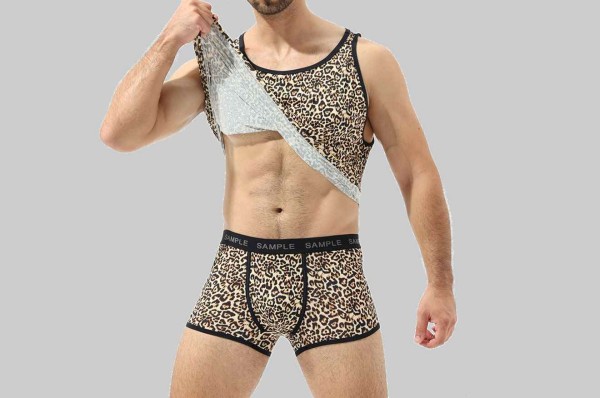
Can modal’s drape be engineered for specific fits (e.g., supportive vs. relaxed)?
Absolutely. Modal’s drape is a foundational characteristic, but its expression in the final garment is highly engineerable. By adjusting blend ratios with elastane, fabric weight, and cut patterns, manufacturers can direct its fluidity toward a supportive brief or a relaxed lounge pant. The fiber provides the canvas; construction provides the brushstrokes.
So, how do we at Sino Finetex tackle this? For a supportive men’s boxer brief, we might use a modal blend with 8-10% elastane in a heavier, tighter interlock knit. This combination uses modal for its skin-contact comfort and smooth face, while the elastane and knit structure provide the necessary compression and grip. The drape here is controlled—it contours without collapsing. For a women’s camisole, we might opt for a pure modal or a 95/5 modal-lycra blend in a lighter single jersey. This allows for a breathtaking, fluid drape that highlights the body’s form softly. The pattern cutting is also crucial. Drapier fabrics require precision in grading and seam placement to prevent distortion. We use proprietary algorithms developed from our compression garment research to map tension zones, ensuring the garment stretches and recovers in harmony with the body’s movements. Isn’t the goal just to make it stretchy? Not exactly. The goal is to make it move *with* you, and that requires engineering the drape, not just the stretch.
What are common pitfalls that ruin modal’s premium drape in manufacturing?
The most common pitfalls are over-compression during finishing, using low-quality modal yarn with inconsistent filament length, and incorrect sewing thread and tension. Each of these can introduce puckering, stiffness, or distortion, turning the fluid fabric into a cheap-looking garment.
Beyond speed considerations, the finishing stage is where drape is often made or broken. Aggressive calendaring or compressive shrinking processes can permanently flatten the knit, destroying its loft and natural hand, making it feel papery. At Sino Finetex, we employ a gentle, steam-based finishing protocol that relaxes the fabric into its final state without crushing it. Another frequent issue is yarn quality. Inexpensive modal may have shorter fibers or impurities, leading to pilling and a loss of surface smoothness over just a few washes, which directly degrades the drape. We mitigate this by sourcing from certified, top-tier pulp suppliers and conducting rigorous in-house tensile and pilling tests. Finally, the sewing process must be invisible. Using a thick, rigid polyester thread on a delicate modal fabric will create hard, rippled seams. We match thread elasticity and weight to the fabric and employ specialized stitch types, like flatlock or covered seams, that preserve the seamless look and feel.
Sino Finetex Expert Insight
FAQs
Yes, typically. While both are regenerated cellulosics, modal’s longer filament fibers and smoother surface generally give it a heavier, more fluid drape compared to bamboo (rayon from bamboo), which can have a slightly drier, more textured hand.
Will modal underwear lose its drape after washing?
Not if it’s well-made. High-quality modal from a specialist like Sino Finetex undergoes pre-shrinking and stability finishing. Proper care (cold wash, gentle cycle, lay flat to dry) will maintain its drape for the garment’s lifetime. Poor-quality modal may become limp or distorted.
Is modal too drapey for supportive athletic underwear?
Not necessarily. By blending modal with a higher percentage of elastane (e.g., 15-20%) and using a compressive knit construction, manufacturers can harness modal’s comfort for the inner layer while achieving the necessary support and muscle encapsulation for athletic performance.
Why does some modal feel cheap and clingy instead of fluid?
This is often due to a low fabric weight (too thin), a poor-quality knit that lacks recovery, or an overly aggressive chemical finish. Premium modal should have a substantial, weighty hand that glides over the skin rather than statically clinging to it.
