
Color is the first thing a customer sees and the first thing that fails: dye bleeding onto other laundry in the first wash, crocking that rubs color onto skin and lighter clothes, or shade variation between batches that makes a multi-pack look assembled from different products. Because underwear sits against skin and washes more often than most garments, color fastness is a quality and safety issue, not an aesthetic one. This guide covers the fastness tests that matter, how dye class and color choice change the risk, and the checks that keep bulk orders consistent from first article to final shipment.
Why color fails before fit does
Color fails before fit because it is visible immediately: bleeding dyes stain other garments in the first wash, crocking rubs color onto skin and clothes, and shade variation between batches is obvious at a glance. Test color fastness on samples, set standards per color, and check every bulk lot before shipment.
Fit complaints take time — the customer wears the garment, waits, and returns it. Color failures happen in the first wash cycle and produce a different, more damaging outcome: the customer does not just return the underwear, they complain that it ruined other clothes. The stakes are higher for dark colors and bright saturated shades, which carry more dye and therefore more risk of bleeding and crocking. Fastness failures also surface as skin complaints when color transfers onto the body, which turns a quality issue into a safety complaint. This is why fastness belongs in the approved-spec stage, not the complaint stage: once bulk is dyed, the options are expensive re-dyeing or shipping a known defect.
Types of color fastness that matter
Underwear is judged on four fastness properties, and they measure different risks. Colorfastness to laundering measures how much color is lost or transferred in the wash — the test that predicts bleeding into other garments. Colorfastness to crocking measures color transfer by rubbing, wet and dry, which predicts staining on skin and light clothing during wear. Colorfastness to perspiration matters for next-to-skin garments, because sweat can pull dye out of the fabric, and colorfastness to light matters for anything exposed when drying or displaying. Each property has its own pass threshold and its own dependency on dye class, and a fabric can pass laundering and fail crocking. Specify all four, not just the wash test, because the customer experiences all four.
Dye classes and their wash behavior
Dye chemistry decides how a color behaves. Reactive and vat dyes bond strongly to cellulosic fibers like cotton, modal and bamboo, which is why they are the standard choice for underwear fabrics that must survive frequent washing. Direct dyes are cheaper and easier to apply but bond more loosely, so they bleed more — the classic cause of first-wash staining in budget garments. Disperse dyes are used for synthetics like polyester and polyamide; they are generally fast on the fiber but can crock if not properly heat-set. For an OEM line, the dye class should be specified, not assumed: a supplier quoting a low price may be using direct dye on cotton and passing the saving to the customer as bleeding. Ask which dye class is used for each color before sampling, and test the finished fabric, because dye application quality matters as much as dye chemistry.
Dark colors and bleeding risks
Dark colors are the highest-risk zone in underwear. Black, navy, deep red and other saturated shades carry more dye per gram of fabric, so they have more color available to bleed or crock, and the failure is more visible on light laundry and skin. The practical response is not to avoid dark colors — they sell — but to test them harder. Run the laundering and crocking tests on dark shades specifically, confirm the fabric is properly washed and fixed after dyeing to remove unfixed dye, and consider a higher fastness requirement for darks than for light colors. If a dark shade keeps failing, the fix is usually a different dye class or a modified dyeing process, not a finishing chemical that masks the problem and fails the next wash.
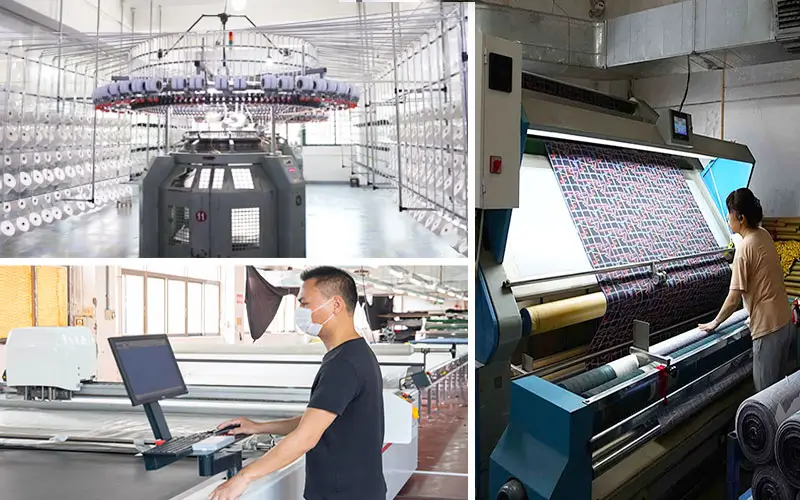
Testing color fastness on samples
Fastness testing is standardized, so the spec can name the method. AATCC TM61 evaluates colorfastness to laundering under accelerated conditions, AATCC TM8 measures colorfastness to crocking with a crockmeter, and ISO 105-C06 is the international laundering equivalent used widely in apparel trade. Test on the finished fabric and on the sewn garment, because seams, waistbands and trims can behave differently from the body fabric. Grade results on the standard 1-to-5 gray-scale rating, where 5 is no change and 1 is severe change, and set a pass level per color and per end use — next-to-skin garments justify a stricter threshold than outerwear. Third-party labs such as Intertek run the full fastness suite, which keeps results independent of the factory’s own lab.
Matching color across dye lots
Two batches dyed at different times will not be identical, and the question is how far apart they may be. Color consistency across dye lots is managed with standards: an approved physical standard swatch (or digital standard with a measured L*a*b* value) that every lot is matched against, a tolerance expressed as a delta-E value, and a lighting standard for evaluation, because colors match differently under different light sources. The tolerance must be realistic — a delta-E of zero is impossible, and a delta-E of 1.0 is very tight, while 2.0–3.0 is common for apparel depending on the color and the brand’s expectations. Require the supplier to report the delta-E of each lot against the standard, and hold the physical standard so there is no dispute about which shade the bulk was supposed to match.
Color consistency in bulk production
Bulk production introduces variation the sample room never shows: multiple dye lots, different machines, and fabric rolls that take up dye differently. The control points are dye-lot management and shade-sorting. Ask the factory how many dye lots your order will require and how they plan to keep each lot consistent, and request that pieces within a pack or a garment (waistband versus body) come from the same lot so components do not visibly differ. Shade-sorting at cutting and finishing catches rolls that drifted before they become garments. A bulk QC check should include a shade audit against the approved standard on a representative sample, and the audit should happen at finishing, not at shipping, so there is still time to re-dye or re-cut rather than choose between delaying and shipping a mismatch.
Choosing dye processes that hold color
The process, not just the dye, decides whether color holds. High-temperature dyeing with proper fixation, thorough washing-off to remove unfixed dye, and controlled finishing temperatures all improve fastness; shortcuts in any of them show up in the first wash. For cellulosic fibers, reactive dyeing with a complete wash-off sequence is the reliable route to laundering-fast color, and for synthetics, correct heat-setting fixes disperse dye in the fiber. Certified suppliers provide a second layer of confidence: dyehouses operating under environmental and chemical-compliance programs, such as those aligned with OEKO-TEX or GOTS where organic cotton is used, are audited on processes that affect both fastness and chemical safety. When a supplier cannot describe their dyeing and wash-off process, treat the fastness certificate with caution.
Communicating color standards to factories
A color standard is only as good as its communication. Send a physical approved swatch with the tech pack, provide the L*a*b* values and the delta-E tolerance in writing, name the lighting condition for evaluation (D65 daylight is the common standard), and specify the test methods and pass grades for each fastness property. State whether the tolerance applies to body fabric only or to trims, waistbands and prints too, because components are dyed in different lots and by different suppliers. Require the factory to submit a lab dip for approval before bulk dyeing and a shipment sample for approval after finishing. The written standard protects both sides: the factory knows exactly what to hit, and you have a documented basis for accepting or rejecting a lot.
Handling color complaints in the field
When a color complaint arrives — bleeding, crocking or a shade mismatch between pieces — treat it as a data point, not a one-off. Collect the affected pieces and the specifics: was it the first wash, what detergent and temperature, what color, and what fastness property failed? A single complaint may be consumer misuse, but a pattern across colors, lots or washes points to a process problem at the factory. Compare the returned garment against the retained shipment sample and the approved standard, and re-run the fastness tests on the retained lot before deciding. If the tests confirm a failure, the response is a corrective action at the dyehouse — process change, dye-class change or stricter wash-off — not a discount on the next order.
A color-approval checklist
Use this checklist to gate every new color before it enters bulk. Each item maps to a failure mode that is expensive to fix after dyeing, so run the full list rather than sampling items by convenience.
- Dye class specified and appropriate for the fiber (reactive for cellulosics, heat-set disperse for synthetics)
- Fastness tests named: laundering, crocking, perspiration, light
- Pass grade set per property and per color (stricter for darks and next-to-skin)
- Tests run on finished fabric and sewn garment, not only the swatch
- Physical standard swatch and L*a*b* values provided with the tech pack
- Delta-E tolerance and lighting condition stated in writing
- Lab dip approved before bulk dyeing; shipment sample approved after finishing
- Dye-lot plan confirmed so components and pack pieces match
- Shade audit at finishing, not only at shipping
- Retained sample kept for complaint comparison
The two checks that protect you most are the dark-color laundering test and the delta-E tolerance on the physical standard: dark shades are where bleeding becomes a complaint, and an unwritten tolerance is where shade disputes start. Sino Finetex’s capabilities page describes the quality checks we run on color and fabric before shipment, and our men’s underwear manufacturing page covers how color standards are applied across production.
A checklist is only as useful as its record: keep the test reports, the delta-E values and the approved swatch for every color, because the retained evidence is what settles the dispute if a later batch drifts or a customer complains. Without the record, the checklist protects the process but not the decision.
FAQ
Why does my underwear bleed in the first wash?
Bleeding in the first wash means unfixed dye is leaving the fabric — either the dye class bonds loosely to the fiber (direct dye on cotton is the common case) or the wash-off after dyeing was incomplete. Dark colors bleed more because they carry more dye. The fix is a different dye class or a complete wash-off process at the dyehouse, not a finishing chemical. Test the finished fabric for laundering fastness before approving bulk, and expect some initial rinse-off even on good fabric.
What is a good color fastness rating for underwear?
On the standard 1-to-5 gray scale, next-to-skin underwear should target a laundering fastness of 4 or higher for staining and color change, with 3.5–4 as a minimum for dark shades on staining. Crocking should be at least 3.5–4 for darks. These are practical starting points; your brand standards may be stricter. Always name the test method alongside the grade, because a rating without a method is not comparable across suppliers.
How do we ensure consistent color across bulk batches?
Control it with standards and tolerances: approve a physical standard swatch, set a delta-E tolerance against that standard, and require the supplier to report the measured value for each dye lot. Manage dye-lot planning so components and pack pieces match, and audit shade at finishing rather than shipping. Accept that dye lots differ — the goal is to keep differences inside the agreed tolerance, not to make every batch identical.
Can dark colors ever be guaranteed not to bleed?
No fabric can be guaranteed absolutely colorfast forever, but dark colors can be made fast enough for normal use. The combination that works is the right dye class, complete wash-off to remove unfixed dye, and a stricter fastness requirement tested on the dark shade itself. Communicate realistic care guidance on the label — cold wash for darks is standard — and keep the retained sample so a rare complaint can be checked against the actual shipped lot.
Setting color standards for an underwear order and want the fastness tests run before bulk? Send your colors and standards through the contact page — we can provide lab dips, fastness data and a shade-approval process before you commit to production.
