
Most underwear lines are still built from a one-shape size chart, and that is why fit-related returns stay high: the measurements that define fit — waist, hip, rise and leg — shift differently across body types, and a single grading rule does not capture that. Inclusive sizing is not about adding an XL to an existing chart; it is about re-deriving the size run from body data for your actual market, then validating fit on real wearers. This guide walks through the process: collecting body data, grading stretch fabrics, adjusting proportions per size, and verifying fit before you commit to bulk.
Why inclusive fit starts before the fabric is cut
Inclusive underwear sizing starts before the fabric is cut: collect body measurements for your market, grade waist, hip and rise from that data, and validate the run with wear trials across every size. Linear scaling from S to 4XL creates fit failures; data-driven grading and testing create a range that actually fits.
Fit problems are locked in at the pattern and grading stage, and no fabric choice can fix them later. Grading assumes proportions scale linearly from S to 4XL, but real bodies change proportion: waist-to-hip ratios shift, rise needs grow, and thigh circumference increases faster than waist in many plus-size bodies. Industry data shows why this matters commercially: e-commerce apparel return rates are estimated at 17–25%, and roughly 60% of those returns relate to buying the wrong size, per Sourcing Journal’s analysis of omnichannel returns. For underwear, the stakes are higher because the product cannot be visually verified before purchase. The practical implication for a brand is clear: define the size run from measured body data for your market before a single garment is cut.
Collecting body data for your target market
An inclusive size run starts with anthropometric data, not with a competitor’s chart. The measurement set should follow a defined standard so it is comparable across sources: ISO 8559-1 specifies the body measurements used to build physical and digital anthropometric databases, and ASTM D5219 standardizes the terminology for body dimensions in apparel sizing. For underwear you need waist, hip, rise (front and back), thigh and leg-opening measurements, collected across the full range you plan to cover. Sources include published sizing surveys, retailer return data, your own wear trials, and — for the plus range — dedicated big-men’s or women’s sizing tables. Collect enough points per size band to see the distribution, not just the average, because a single average waist hides a wide spread of hip and rise combinations.
Building a size run from S to 4XL
A size run is a set of body measurement tables with consistent intervals, and each size must be defined by waist, hip and rise together — never waist alone. The example below shows the structure for a men’s underwear line; treat the numbers as illustrative, because your target market data should drive the actual values.
| Size | Waist range (cm) | Hip range (cm) | Rise note |
|---|---|---|---|
| S | 71–76 | 86–91 | Standard |
| M | 76–81 | 91–96 | Standard |
| L | 81–86 | 96–101 | Standard |
| XL | 86–96 | 101–111 | Slightly longer rise |
| 2XL | 96–106 | 111–121 | Longer rise, wider thigh |
| 3XL | 106–116 | 121–131 | Longer rise, wider thigh |
| 4XL | 116–126 | 131–141 | Longest rise, widest thigh |
Waist intervals of roughly 5 cm per size are common in this category, but hip and rise intervals should not follow the same step if your body data says otherwise. A size run that covers the market’s actual distribution — not just the middle — is what makes a range inclusive rather than merely extended.
Most lines still stop at 2XL: Sourcing Journal’s coverage of the extended-size market reports that consistent sizing beyond 2X is rare, which makes a genuine S-to-4XL run a market gap rather than a marketing label. The commercial opportunity is real: buyers above 2XL are served by very few brands, so a verifiably fitted extended range converts the most underserved customers.
Grading rules for stretch versus woven fabrics
Stretch changes the grading math. A knit with strong stretch recovery can span a wider body measurement range per size, because the fabric accommodates the difference; a low-stretch or woven fabric cannot, so grade intervals must be tighter and the size run denser. The rule of thumb: set the grade interval from the fabric’s tested stretch and recovery, not from habit. Measure the fabric’s elongation under the load a waistband actually sees, then confirm that the garment’s minimum and maximum fit range covers each size band without bagging at the small end or binding at the large end. This is also why two brands selling the same size labels can fit completely differently — their fabrics and grade rules differ. For an OEM line, the grade spec belongs in the tech pack alongside the fabric spec.
Testing fit on real wearers, not mannequins
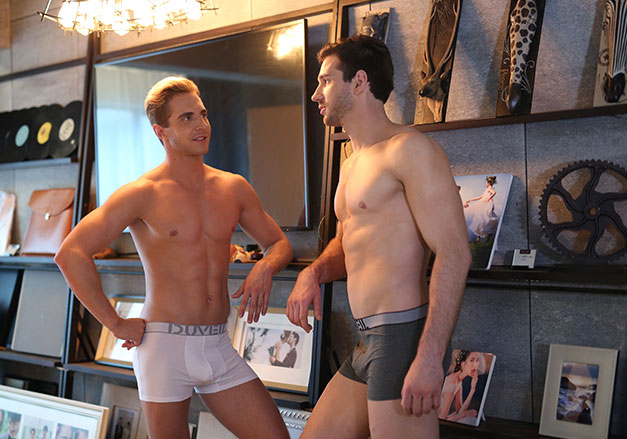
Mannequins represent one static shape; wearers move, sit, bend and wash the garment. Fit problems in underwear appear in exactly those moments: waistband roll when seated, ride-up on the thigh, binding in the rise, or sagging after a few hours. Fit validation therefore requires wear trials on real testers across the full size run and a range of body shapes — not just the model sizes. Recruit testers whose measured waist, hip and rise sit at different points within each size band, and collect structured feedback: comfort at the waistband, rise length sitting and standing, leg-opening pressure, and how the garment looks after a full day. Photograph each tester front, side and back so the pattern team can see the same issues the wearer reports.
Adjusting rise, leg and hip proportions per size
The most common failure in extended size runs is linear grading: every size scales by the same percentage, so at 4XL the rise becomes proportionally too short and the leg opening too tight for the hip and thigh measurements. Plus-size bodies typically need a longer rise and a wider hip-to-waist difference than a simple scale produces, and thigh circumference grows faster than waist in many body types. The fix is per-size pattern adjustment: set rise, hip and leg-opening values from the body data table for that size band, then blend between sizes so the silhouette stays consistent. When you review graded samples, check the proportions, not just the measurements: a 4XL that fits the waist but binds the thigh has failed the inclusive test even though the size chart says it should fit.
Managing return rates with better fit tables
Fit tables are a return-rate lever, and the data is on your side: size and fit are consistently among the top reasons for e-commerce apparel returns, as Sourcing Journal reports on data-driven sizing. A better fit table gives buyers the information they need to pick the right size the first time: body measurements (waist and hip ranges per size), garment measurements (flat waistband, rise, leg opening), the fit intent (slim, regular, relaxed), and guidance for in-between sizes. For underwear specifically, also state the fabric’s stretch so a buyer between sizes knows which direction to go. Publishing all four reduces guesswork, and guesswork is what drives wrong-size orders in a category where buyers cannot try before buying.
Communicating fit honestly in size charts
Honesty in a size chart means separating body measurements from garment measurements and saying which is which. Many charts list only garment measurements, which creates a mismatch: a buyer measures their waist, compares it to the garment’s flat waistband, and concludes the size is wrong. Label each column clearly — “your body” versus “the garment” — and add the fit intent and stretch notes so the chart reads consistently across sizes. For an inclusive range, this matters even more, because plus-size buyers are the most burned by inconsistent charts and the least willing to gamble on a wrong size. If a chart cannot be answered simply — “measure your waist, pick the row your waist falls in” — it is not doing its job.
Validating fit through wear trials
Structured wear trials are the final check before bulk, and they should follow a protocol rather than a casual pass-around. Define the wash cycle and number of washes (fit and fabric change after the first few washes, so test at least after one wash, then after five), the wear duration (a full day, including sitting and movement), and the scoring criteria: no waistband roll, no thigh ride-up, no binding in the rise, no sag after wearing. Collect both subjective comfort scores and objective observations from the pattern team. Pass criteria should be agreed before the trial, so the results are decisions, not opinions. For an inclusive line, run trials across every size in the range, with multiple testers per size.
Working with factories on inclusive grading
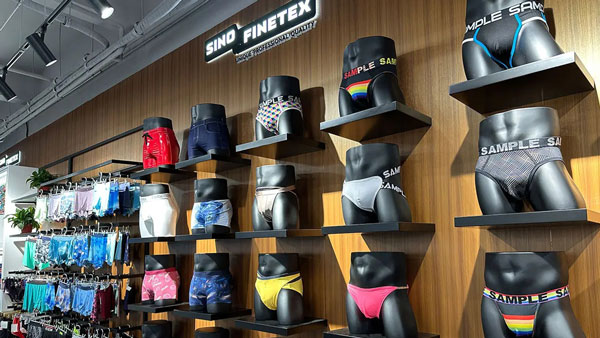
A factory’s default grade rules are built for its standard customer, so inclusive grading has to be specified, not assumed. Put the full size spec — body measurement table, grade intervals, per-size rise and hip adjustments — into the tech pack, and require the factory to produce a graded spec sheet for your approval before cutting. Ask for first articles in every size, not just the middle sizes, and check the plus sizes against the body data rather than a scaled version of the M. Sino Finetex’s men’s underwear manufacturing and capabilities pages describe the sampling and grading process we run for brand lines; the same discipline applies whether you are manufacturing with us or any other partner — the graded spec sheet is your control point.
A fit-validation checklist for your first line
This checklist condenses the process into eight gates you can run before committing to bulk. Each gate maps to a failure you are trying to avoid: a range that looks inclusive in the size chart but fits only one body shape in reality. Run the gates in sequence, because each one feeds the next — without body data the size run is guesswork, without grade rules the fabric undermines the pattern, and without trials the chart is unverified. Treat a failed gate as a stop for correction, not a delay to push through.
- Body data collected for your target market, across the full size range
- Size run defined by waist, hip and rise, not waist alone
- Grade intervals set from the fabric’s tested stretch and recovery
- Per-size rise, hip and leg adjustments reviewed against body data
- Wear trials run on multiple body shapes per size, after washing
- Size charts separate body measurements from garment measurements
- Graded spec sheet and first articles approved in every size
- Post-launch return data reviewed against the fit table
Two gates deserve emphasis. The graded spec sheet is the document that protects you from a factory silently reverting to its default grading, and the wear-trial gate is the only one that catches proportion problems linear grading hides. If either is skipped, the inclusive range is a marketing claim rather than a fit system.
FAQ
How many sizes does an inclusive underwear range need?
There is no fixed number — the range should cover the actual body measurement distribution of your market. Many men’s underwear lines run S to 4XL (seven sizes), and some go further; the right number depends on your body data and on how much stretch your fabric has. A high-stretch knit can span a wider range per size, so fewer sizes may work; a low-stretch fabric needs a denser run. Define sizes by waist, hip and rise data rather than by starting from a competitor’s chart.
What measurements should an underwear size chart include?
At minimum, waist and hip ranges for the body, plus the garment’s flat waistband, rise and leg-opening measurements. Rise is the most under-reported measurement in underwear and the most common source of fit complaints, so include front and back rise if your pattern differentiates them. Add the fit intent (slim, regular, relaxed) and the fabric’s stretch so in-between buyers know which way to size. Label body versus garment columns clearly.
Does stretch mean we can offer fewer sizes?
Yes, up to a point. A fabric with high stretch and strong recovery can accommodate a wider body measurement range per size, which lets you cover the same population with fewer SKUs. The catch is recovery: if the fabric stretches but does not return, the garment bags out quickly and the size range becomes a comfort problem. Base the number of sizes on tested stretch and recovery, not on the fiber content claimed on the label.
How do I reduce fit-related returns?
Publish a fit table that separates body measurements from garment measurements, state the fit intent and stretch, and give guidance for in-between sizes. Then validate the range with wear trials across body shapes so the chart matches reality. Size and fit are consistently among the top reasons for apparel returns, so every uncertainty the chart removes converts directly into fewer wrong-size orders.
Building an inclusive underwear range? Send your target markets, body-data source and size strategy through the contact page — we can grade and sample the full run from S to 4XL against your size spec before you commit to bulk.
