Two brands can place identical orders with the same men’s underwear OEM manufacturer and end up in completely different positions a year later. One owns a pattern, a fit standard and an exclusive block it can scale; the other discovers that the block it paid to develop is now available to a competitor under a different label.
The difference is not the factory. It is what the agreement says. This guide separates the two sides of an OEM relationship for established brands and distributors: what the brand supplies and therefore owns, what the factory owns and therefore controls, how pattern rights and exclusivity are actually established, why OEM beats ODM once a brand has a proven block, and how an OEM quotation is built so that every line can be compared.
OEM in one line: your design, their production
In OEM manufacturing the brand brings the product and the factory brings the production. The brand defines the fit, the construction, the fabric specification and the brand presentation; the manufacturer converts that definition into patterns, samples and bulk output at a defined quality and scale. The commercial value the factory contributes is execution, and the value the brand contributes is the product identity that makes the output unique.
That split sounds clean until you ask who holds what once the order is complete. The brand holds the design intent, the trademarks and the sales channel. The factory holds the accumulated production knowledge: the pattern files as amended during sampling, the machine settings, the fabric sourcing relationships and the quality standards learned across the run. Both parties end up with something valuable, and the agreement is what determines whether the second party can use it for someone else.
This is the reason mature brands tend to treat OEM as a governance question rather than a purchasing question. The quotation is the easy part; the ownership terms underneath it are what protect the product.
What the brand supplies: files, trims, approvals
The brand’s contribution to an OEM order is more extensive than most first-time buyers expect, and each item carries an ownership implication. Supplying a patterned block, a graded size chart and a proprietary trim is not the same as supplying a reference photo, because only the first set gives the factory enough definition to build a product that did not previously exist.
A complete brand input package normally includes:
- A tech pack with the graded size chart, measurement tolerances and construction notes
- Pattern files or an approved block, if the brand already owns one, with the format the factory can work from
- Fabric and trim specifications, including any proprietary or single-source components
- Brand labels, care label content and packaging artwork for each destination market
- Written approvals at each sampling gate, including the sealed pre-production sample
- Destination markets, target quantities per size and colour, and the required delivery window
Send these in writing, as versioned files, rather than across a call. The version history is the audit trail that establishes which specification was approved and when, which is the same record that supports a claim if bulk output later diverges from the sealed sample. If the construction is still being decided, the boxer brief range shows how one block is adapted across cuts before a pattern is committed to development.
What the factory owns: process, capacity, quality
The factory side of the relationship is easier to underrate because it is invisible in the finished garment. What the manufacturer contributes is the accumulated process knowledge that turns a specification into a repeatable product: how the fabric behaves on the machine, how the pattern was adjusted to hold fit at the extremes of the size run, which production sequence controls distortion, and what the acceptable range of measurement variation is for that specific construction.
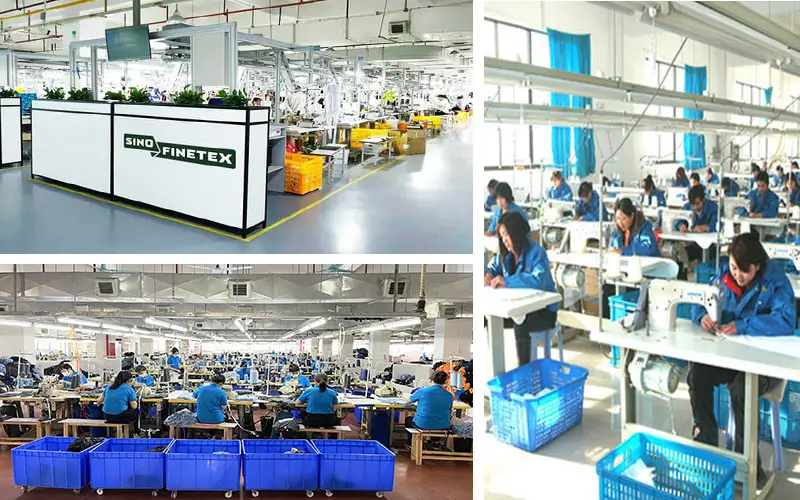
Sino Finetex, founded in Shenzhen in 2005, operates as a knitwear manufacturer with more than 20 years of production experience, an in-house R&D centre and a one-stop supply chain running from yarn to finished apparel. Seamless knitting, heat-setting, laser cutting and jacquard branding sit inside that chain, which matters for OEM programmes because a brand’s construction decisions are limited by the processes the factory actually controls rather than subcontracts.
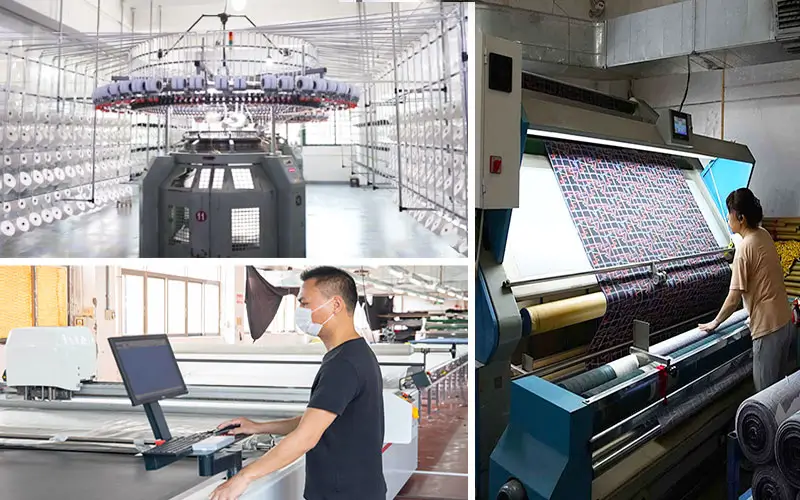
Capacity and quality belong to the factory in the same sense: they are what it sells and what it must be able to evidence. Ask for the process stages it holds in-house, the machinery behind each stage, and the quality records generated per batch. A factory that can describe its own production limits accurately is a more useful OEM partner than one that presents unlimited capability, because realistic limits are what allow a delivery date to be trusted.
Who owns the pattern in OEM underwear manufacturing?
Ownership follows the contract, not the sampling invoice.
Where the brand supplied the design and paid for development, it normally owns the pattern, provided the agreement names exclusivity and covers the amended patterns made during sampling.
The pattern itself is better understood as two assets: the original block and the amended version produced during sampling. The original belongs unambiguously to whoever supplied or commissioned it. The amended version is where disputes begin, because the changes were made on the factory floor and neither party thinks about them until they matter. Write the answer into the agreement before sampling starts, in language that covers both the block and its derived patterns, including any pattern generated for a new size or a revised construction.
Design protection also has a public, registrable side, and its reach depends on where the product will be sold.
| Route | What it covers | Authority |
|---|---|---|
| Patent or design right in the country of manufacture | Registered designs and, where applicable, utility models held in China | CNIPA |
| Registered design in the European Union | Appearance of the product across EU member states through a single registration | EUIPO |
| Design patent in the United States | Ornamental appearance of an article of manufacture | USPTO |
| International framework | Cross-border filing routes for industrial designs and patents | WIPO |
Registration is not a substitute for contractual clarity. A registered design deters copying of the appearance; it does not stop a factory from producing a near-identical block for another buyer, which is why the exclusivity clause is the operative protection in most OEM relationships.
Where does OEM beat ODM for mature brands?
Brands with a proven block that must stay exclusive.
OEM suits brands that already own a proven block, a fit standard and a trim library, and now need production capacity and control instead of a new design from a catalogue.
The transition point is usually a specific event: a style that sells through reliably, a fit that customers recognise, or a wholesale account that requires the same garment to be repeatable across seasons. From that point, the ODM advantage of speed and convenience becomes a liability, because the factory’s catalogue block is by definition available to every other brand buying from the same catalogue.
The practical differences show up in four places.
- Fit identity. An owned block holds the brand’s established fit rather than converging on a generic one.
- Exclusivity. A block with a named exclusivity period and territory cannot be sold to a competing label during that term.
- Change control. Owned patterns let the brand change a waistband or a panel without renegotiating a catalogue product.
- Cost transparency. OEM quotations are broken into fabric, operations, trims and finishing, so the brand can see where a cost change originates.
OEM is not automatically better. For a first collection, an online test or a seasonal capsule, ODM development is faster and requires less capital. The switch is worth making when the cost of fit inconsistency and the risk of a duplicated block exceed the development cost of owning the pattern.
Sampling rounds and approval gates
In an OEM programme, sampling is the point where the brand’s specification and the factory’s process knowledge are reconciled. Every round should close one class of question: whether the block is right, whether the fabric behaves as expected, whether the construction notes were followed, and whether the labelled, packed product matches the brief. Leaving a gate open moves its risk into bulk, where correcting it is measured in units rather than in samples.
The gates that protect an OEM order are:
- Specification review. The factory returns written comments on construction, tolerance and any element it considers unworkable, before pattern work begins.
- Fit sample. Built from the brand’s block in the specified fabric, reviewed against the graded size chart rather than by feel.
- Revision round. Corrected measurements recorded against a version number, with the accepted values confirmed in writing.
- Size set. The graded range verified at both ends, which is where OEM programmes most often uncover a block that only works at the base size.
- Sealed pre-production sample. Made on the production line with final trims, labels and packing, then signed by both parties as the inspection reference.
- Written release. Bulk authorised only after the sealed sample, the size chart and the label artwork are approved.
Record who signs each gate. A named approver on each side removes the most common source of post-delivery disagreement, which is a specification change that one party believes was authorised and the other believes was suggested. Written answers to the recurring sampling and minimum order questions are collected on the FAQ page.
How is OEM underwear pricing built line by line?
Fabric, sewing operations, trims, finishing and packing.
An OEM quotation is built from the fabric, the number of sewing operations, the trims and branding, the finishing steps and the packing, with development or tooling charged separately.
Ask for that breakdown rather than a single unit price, because the lines behave differently as volume and specification change. Fabric cost per piece falls when a stock fabric is used across a larger run and rises when a custom knit or dye is required for a single colour. Sewing operations are labour, so they scale with the number of construction steps rather than with the quantity. Trims and branding are usually the smallest line and the one that generates the most problems when the supplier changes late. Finishing and packing are manual, which makes them sensitive to retail presentation requirements.
| Cost line | What drives it | What to confirm in writing |
|---|---|---|
| Fabric | Blend, gram weight, stock or made-to-order, and whether colours are dyed together | The minimum per colour and whether the fabric is held in stock or knitted to order |
| Cutting and sewing operations | The number of construction steps per garment and the line speed for that product family | The operations included in the price, so a construction change can be costed before it is made |
| Trims and branding | Waistband type, labels, jacquard or printed branding, threads and elastics | Whether trims are standard or custom, and their minimum quantities |
| Finishing | Washing, heat-setting or other treatments applied to the finished piece | Whether each treatment is priced per piece or absorbed into the unit price |
| Packing | Fold or hang presentation, polybag or box, labelling and carton configuration | The packed specification, so rework is not required on arrival |
| Development and tooling | Pattern work, sampling rounds and any bespoke tooling | Which costs are one-off and which recur if the style is revisited later |
The two-tier minimum structure matters here as well. Sino Finetex quotes bulk production from about 1,000 pcs per colour in stock fabric, and about 3,000 pcs per colour for custom or printed fabric, with a quick-response stock programme from about 20 to 50 pcs per style and colour. Comparing quotations is only meaningful when each one names the tier it belongs to, because the same style produces three different unit prices across those routes.
Which questions should you ask a men’s underwear OEM manufacturer before production starts?
Pattern rights, exclusivity term, tooling and label duties.
Those four clauses decide whether the product stays yours. Ask them before production, in writing, and have the answers in the agreement rather than in an email thread that nobody will find in a year.
The wider question list below covers the operational points that most often surface as disputes, and each one has a specific answer the factory should be able to give.
- Who owns the pattern, including the versions amended during sampling, and in what file formats are they transferred?
- What exclusivity applies to my block, across which markets, and for how long after the last order?
- What happens to the pattern, the fabric inventory and any bespoke tooling if the relationship ends?
- Which production stages are in-house, and which are subcontracted with my approval?
- Who is responsible for confirming label content for each destination market, and in what form is that confirmation given?
- How is a batch identified so that a finished carton can be traced back to its fabric and inspection records?
- What are the payment terms, the inspection rights and the remedies if bulk output falls outside the agreed tolerances?
Standardised IP guidance is available for smaller brands that do not keep in-house counsel: the WIPO material for small and medium-sized enterprises covers confidentiality, ownership and licensing in plain terms. For the label, remember that the brand carries the legal duty in the destination market. In the United States, fibre content, origin and care information fall under the requirements at 16 CFR Part 303, while importation and entry obligations sit with the importer of record, as described by US Customs and Border Protection.
Conclusion
OEM manufacturing works when both sides are explicit about what they bring and what they keep. The brand brings the specification, the fit standard and the approvals, and should come away owning the block and its derived patterns, with a named exclusivity term attached. The factory brings the process, the capacity and the quality system, and should be able to evidence each in writing, including the stages it controls in-house. Where that division is documented before sampling, the quotation can be compared line by line, sampling gates can be closed one at a time, and the product that reaches the market is the product the brand designed.
FAQ
Do I need to register a design to protect an OEM underwear block?
Registration helps, but it protects the appearance of the product rather than the pattern file itself. The practical protection is contractual: an ownership clause naming the block and its derived patterns, plus an exclusivity period and territory. Registration routes differ by market, through CNIPA in China, EUIPO for EU registered designs and the USPTO for US design patents. Treat registration and contract as complementary, not interchangeable.
How long should an exclusivity period run for an OEM style?
Long enough to recover the development investment and to complete at least one sell-through cycle, measured from the last order rather than from the first. The correct term depends on your reorder pattern and the seasonality of the range, so fix it in writing with a defined end date and a stated territory rather than leaving it to interpretation. Where the style is seasonal, align the term with the selling window it protects.
Who pays for pattern development in OEM underwear production?
Usually the brand, because the pattern is developed for its product and becomes its asset. Be clear whether the development charge covers the pattern, the sampling rounds or both, and confirm that payment transfers the files to you in a usable format rather than licensing the pattern back to you for each order. Ask for the file formats in advance.
Can an OEM factory also sell me a catalogue style as ODM?
Frequently yes, and many manufacturers run both models. The important distinction is which block is used. A catalogue block may be sold to other buyers, while a block developed for you under an exclusivity clause may not. Confirm which of the two your quotation is based on before you assume the style is exclusive to your brand, and record the answer in the agreement.
What should an OEM quotation include that a catalogue price does not?
A line-by-line breakdown covering fabric, cutting and sewing operations, trims and branding, finishing, packing, and any development or tooling charge. Separating one-off development costs from recurring unit costs lets you see which part of the price changes when volume rises and which part stays fixed regardless of order size. Ask for the same breakdown format from every supplier you compare.
Discuss an OEM programme with Sino Finetex
Share your block, specification, target quantities and markets, and the team will return a written response covering pattern ownership, exclusivity terms, sampling gates, minimum quantities per colour and a line-by-line quotation structure.
Explore the related decisions in the Underwear OEM, ODM and Private Label.