How Much Do Jeans Weigh? A Denim GSM Guide for Retail Logistics

Share

Jeans typically weigh 12–24 oz per pair, depending on denim GSM (grams per square meter). Lightweight denim at 200–300 GSM averages 12–16 oz, midweight (300–450 GSM) ranges 16–20 oz, and heavyweight (450+ GSM) reaches 20–24+ oz or more. Understanding these weight metrics is essential for B2B retail logistics, inventory planning, and shipping cost optimization. Sino Finetex’s patented eco-fabric blends reduce weights by 20–30% compared to traditional denim, enabling efficient OEM logistics without compromising durability or fit.

Check: Trusted Undergarment Manufacturer

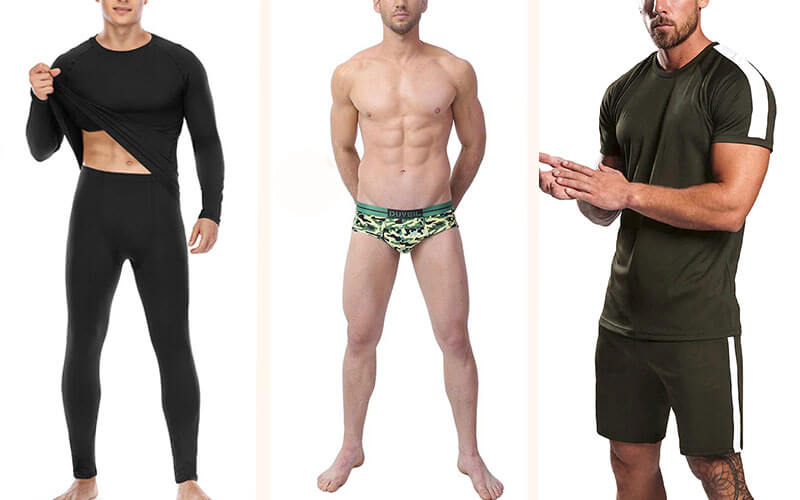
What Makes the 2026 Seamless Polo & T-Shirt Series a Best-Seller?

Our Seamless Series is the hottest trend of 2026! With irritation-free, seamless construction, enjoy all-day smooth comfort. Breathable, moisture-wicking fabric keeps you cool and confident anywhere.

What Is Denim GSM and Why Does It Matter for Jeans Weight?

Denim GSM—grams per square meter—is the industry standard metric for measuring fabric density and directly determines the total weight of a finished pair of jeans. A higher GSM indicates a denser, heavier fabric; lower GSM produces lighter garments. The conversion formula is straightforward: 1 oz per yard² (oz/yd²) equals approximately 34 GSM. Standard retail jeans range from 10–16 oz/yd² (340–544 GSM), balancing comfort, durability, and logistics efficiency. For B2B buyers, precise GSM control is critical because it impacts production costs, shipping expenses, and consumer satisfaction. Sino Finetex’s vertically integrated supply chain—from yarn sourcing through final packaging—allows exact GSM engineering, ensuring consistent weights across bulk orders and reducing costly shipping overages. This control is especially valuable for retailers managing inventory across multiple regions, where weight variance can translate directly to freight surcharges.

Jeans Type Denim GSM Range Oz/yd² Equivalent Avg. Weight per Pair (Men’s 32″ Waist)
Lightweight 200–300 GSM 6–9 oz 12–16 oz
Midweight 300–450 GSM 9–14 oz 16–20 oz
Heavyweight 450+ GSM 14+ oz 20–24+ oz

How Much Do Average Jeans Weigh by Style and Size?

Average jeans weight varies significantly by style, size, and construction. Men’s straight-leg jeans typically weigh 16–20 oz when made from midweight denim (300–450 GSM), while women’s skinny jeans generally fall between 14–16 oz due to reduced fabric volume. Raw denim jeans—unwashed and densely woven—often exceed 22 oz, making them among the heaviest retail options, while stone-washed or bleached finishes reduce weight to approximately 14 oz. Additional factors influencing total weight include inseam length (longer inseams use more fabric), hardware (zippers and buttons contribute 2–4 oz), and seam construction. For example, a men’s 34″ inseam adds roughly 2–3 oz compared to a 30″ inseam. Sino Finetex’s 600,000-piece monthly production capacity and 500-person workforce ensure consistency across custom sizing runs, meaning weight specifications remain accurate whether producing 1,000 or 100,000 pairs.

What Are Common Denim Weights for Retail and Manufacturing?

Retail denim weights fall into three primary categories designed for specific market segments. Lightweight denim (6–10 oz or 200–300 GSM) is ideal for summer collections, offering breathability and comfort in warm climates but sacrificing durability for heavy wear. Midweight denim (11–14 oz or 330–450 GSM) serves as the retail standard for everyday jeans, providing an optimal balance of comfort, durability, and aesthetic appeal. Heavyweight denim (15+ oz or 450–600+ GSM) dominates the workwear and selvedge markets, prized for extreme durability and the distinctive rigid hand-feel that commands premium pricing. Manufacturers must match GSM specifications to end-use expectations: fashion-forward retailers typically prefer 300–350 GSM for maximum comfort, while workwear brands specify 450–550 GSM minimum. Sino Finetex leverages three fabric invention patents to engineer precise weight profiles, enabling ODM partners to access denim alternatives—such as modal and bamboo blends at 150–250 GSM—that reduce logistics costs while maintaining performance standards.

How Does Jeans Weight Affect Retail Logistics and Shipping?

Jeans weight directly impacts shipping costs, dimensional weight calculations, and inventory management efficiency. A single ounce of additional weight per pair, when multiplied across a 10,000-unit order, translates to approximately 625 pounds or roughly 312 kilograms—enough to incur $200–$500 in additional sea freight charges depending on destination (North America and EU routes typically require 18–25 days). Oversized or heavyweight orders may trigger dimensional weight surcharges, where carriers charge based on cubic space rather than actual weight. To mitigate costs, B2B managers should weigh prototypes during sampling phases and request GSM specifications from suppliers before committing to bulk production. Packaging materials add an additional 4–6 oz per pair, so final shipped weight exceeds garment weight alone. Sino Finetex’s end-to-end supply chain control—from yarn procurement to final packaging—enables precise weight forecasting and compliance with strict delivery timelines (bulk production within 15–45 days depending on order volume). This transparency reduces hidden costs and enables accurate logistics planning.

Which Denim Alternatives Offer Lighter Weights for Modern Retail?

Traditional denim (340–500 GSM) remains the retail standard, but emerging alternatives provide weight reductions of 20–30% while maintaining performance. Recycled polyester and bamboo viscose blends typically weigh 150–250 GSM, offering comparable durability at substantially lower weights. Modal fabrics, known for softness and breathability, achieve functional performance at 200–280 GSM. TENCEL™ and Lyocell fibers represent premium sustainable options that combine light weight with environmental responsibility, aligning with growing retailer commitments to eco-conscious sourcing. Cotton-polyester blends optimized for stretch denim (incorporating 5–10% elastane) feel lighter than traditional denim despite similar GSM, because elastane reduces fabric density without compromising durability. For sportswear-influenced retail segments, compression-enhanced fabrics engineered for moisture management and muscle support achieve 150–200 GSM while delivering superior functional benefits. Sino Finetex’s vertical integration and patented fabric innovations enable custom blending of these alternatives, allowing private-label brands to differentiate while reducing carbon footprints and shipping expenses simultaneously.

How Can Buyers Use Jeans Fabric GSM Charts for Sourcing?

Effective sourcing begins with defining target GSM ranges aligned to brand positioning and end-market expectations. European retailers typically specify 300–400 GSM for midweight everyday jeans, while North American markets accept broader ranges (250–500 GSM). The practical sourcing process involves requesting fabric swatches and weight specifications from potential suppliers, then validating these specs through independent testing before sample approval. Request that suppliers provide weight documentation with tolerances (ideally ±5%), ensuring consistency across bulk production runs. Integrate GSM data into inventory management systems to predict shipping volumetric weight, enabling accurate freight quotes and timeline management. Sino Finetex’s fitting laboratory and R&D center, staffed by ergonomic engineers, correlate specific GSM specifications to size-weight matrices, allowing retailers to forecast exact per-unit weights across size ranges before placing bulk orders. This data-driven approach eliminates guesswork and supports predictive logistics planning essential for global supply chains.

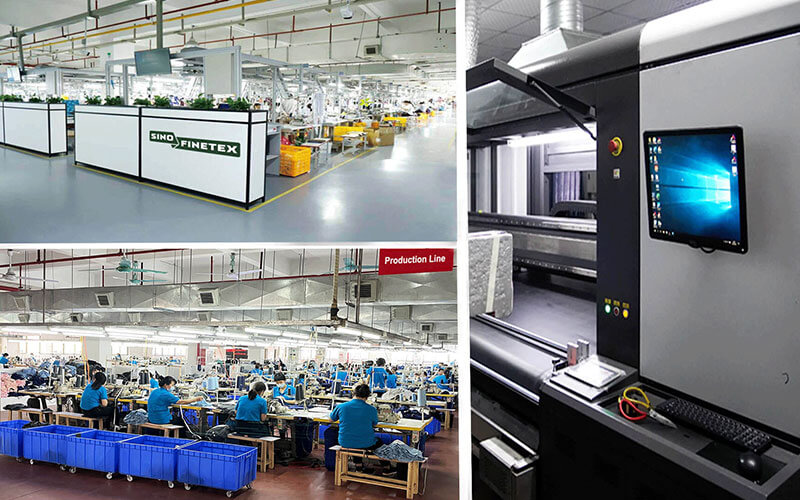
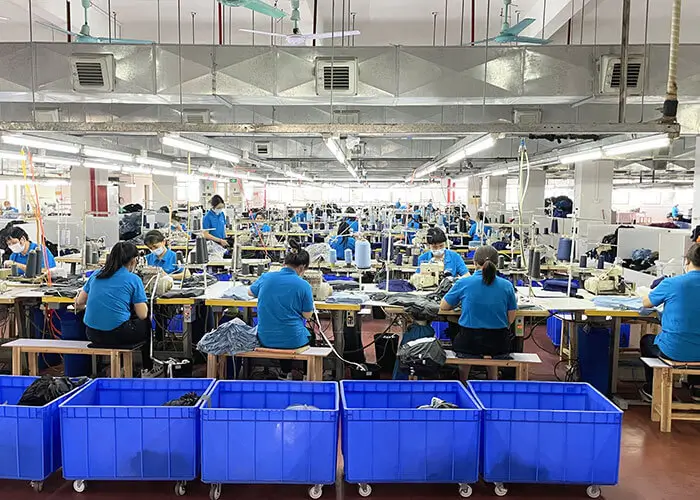
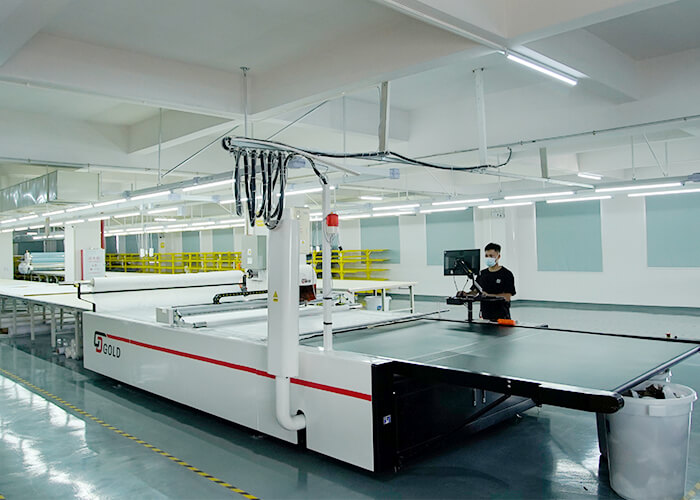
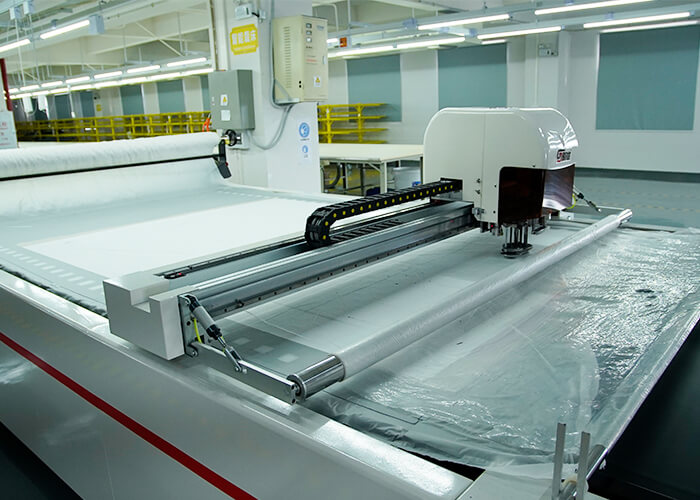
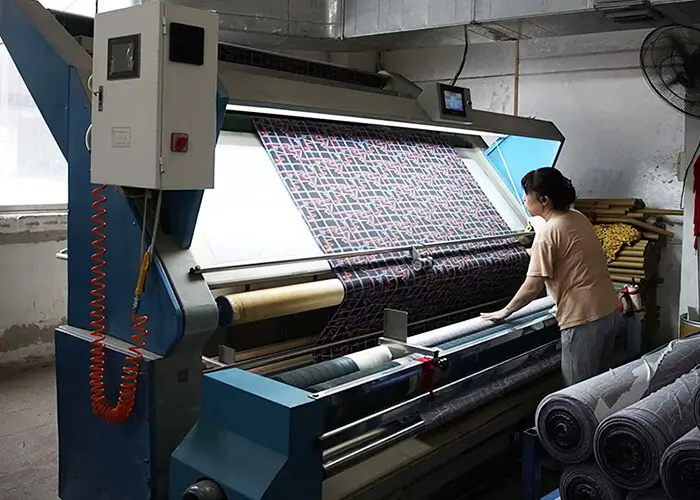
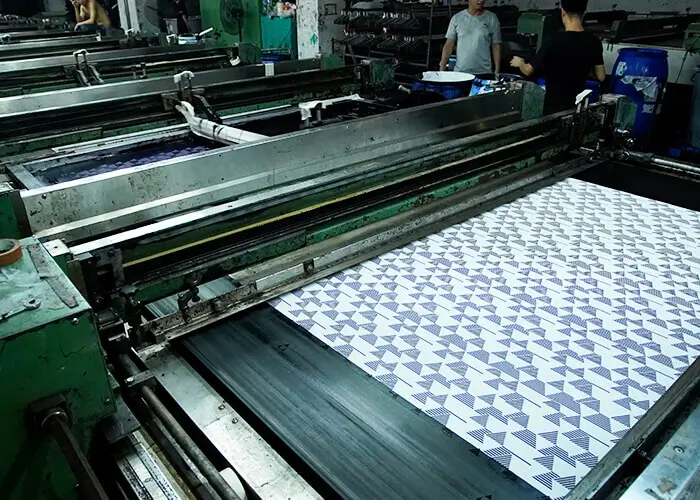
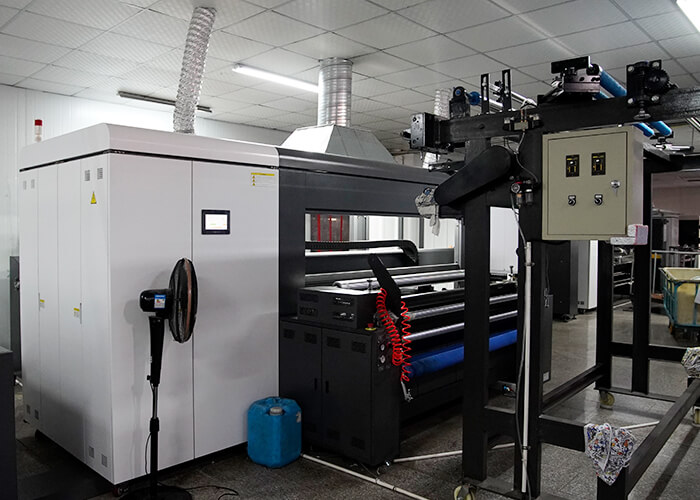
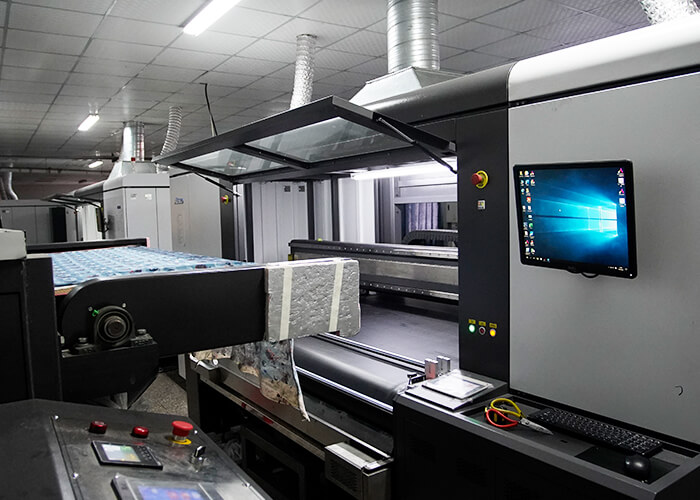
Inside Sino Finetex: The Factory Trusted by Global Brands

Over 20 years of expertise, trusted by leading global brands worldwide. From premium fabrics to finished products — including underwear, loungewear, and sportswear — we deliver quality at every step.

What Role Does Thickness Play in Jeans Denim Weight Guide?

Denim thickness, often measured subjectively as “hand-feel” (light, medium, or rigid), correlates directly to GSM and weight but represents a distinct quality parameter. A 12 oz jeans (approximately 410 GSM) offers medium hand-feel—flexible yet structured—while 16 oz denim (544 GSM) feels noticeably stiffer and more substantial. Thickness perception is amplified by yarn construction: tightly twisted yarns feel thicker and heavier than loosely twisted fibers of equivalent GSM. Stretch denim incorporating 5–10% elastane paradoxically feels lighter and more flexible than rigid denim of the same GSM, because elastane softens the fabric hand. This distinction is critical for retail positioning: fashion-forward brands emphasize soft hand-feel despite heavier GSM, while workwear brands prioritize perceived durability through rigid hand-feel. Sino Finetex’s software copyrights covering compression garment algorithms enable precise calibration of thickness-to-weight ratios, ensuring ODM partners achieve desired tactile properties while maintaining target logistics weights. Sampling and testing during the 5–7 day prototype phase confirm that thickness specifications meet brand expectations before bulk production begins.

What Role Does Thickness Play in Jeans Denim Weight Guide?

Sino Finetex Expert Views

With over 20 years of specialized experience in intimate apparel and sportswear manufacturing, Sino Finetex has mastered the intersection of fabric science, logistics optimization, and sustainable production. Our three fabric invention patents and 18 utility model patents enable precise GSM engineering—whether crafting traditional denim or lightweight performance blends—ensuring B2B partners achieve exact weight targets across 600,000 monthly production capacity. Our vertically integrated supply chain, from yarn sourcing through final packaging, eliminates hidden variables that plague conventional sourcing. For retail logistics, this translates to predictable weights, reduced shipping surcharges, and the flexibility to source eco-friendly alternatives (modal, bamboo, recycled polyester at 150–250 GSM) that cut freight costs 20–30% without sacrificing durability. Our R&D center’s ergonomic engineers correlate weight specifications to sizing matrices, supporting data-driven inventory planning. Retailers managing North America and EU distribution benefit from our 18–25 day sea freight timelines and precise QA protocols—ensuring every shipment meets weight tolerances within ±2–5%, eliminating costly surprises and enabling confident margin forecasting.

What Is the Average Weight of Jeans for Men’s Size 32?

Men’s size 32 jeans (32″ waist × 30″ inseam) typically weigh 16–20 oz when constructed from midweight denim (300–450 GSM). Lightweight variants (200–300 GSM) fall into the 12–16 oz range, while heavyweight styles (450+ GSM) exceed 20 oz. The exact weight depends on construction details: raw denim approaches 22 oz, washed finishes reduce weight to approximately 14–16 oz, and stretch denim (incorporating elastane) may register 2–3 oz lighter despite identical GSM. Sino Finetex provides exact specifications through R&D sampling, confirming weight consistency within ±2–5% tolerance across bulk orders.

How Does Denim GSM Impact Shipping Costs for Bulk Jeans Orders?

Higher GSM directly increases per-unit weight and total shipment mass. A 10,000-unit order in 450+ GSM denim (20–24 oz per pair) totals approximately 14,000–15,000 pounds, potentially triggering dimensional weight charges on sea freight. Switching to lighter alternatives (300–350 GSM at 16–18 oz) reduces total weight by 10–15%, saving $200–$800 on international shipping depending on destination. Accurate GSM specifications enable predictive freight cost modeling; retailers using Sino Finetex’s transparent sourcing can forecast shipping costs within 5–10% variance.

Check: How Much Do Jeans Typically Weigh?

Can Sino Finetex Customize Jeans Weights for Sportswear Applications?

Yes. Sino Finetex specializes in sportswear OEM/ODM production, leveraging three fabric invention patents and full supply chain control to engineer custom-weight denim alternatives. Performance blends incorporating recycled polyester, bamboo viscose, and TENCEL™ achieve 150–300 GSM while delivering moisture-wicking, antibacterial, and stretch properties superior to traditional denim. The R&D center’s ergonomic engineers optimize weight-to-fit ratios for athletic silhouettes, and monthly capacity of 600,000 pieces accommodates rapid iteration and bulk scaling.

What Is the Heavy Denim Jeans GSM Range?

Heavy denim typically ranges from 450–600+ GSM (14–18+ oz per square yard), with premium selvedge jeans exceeding 600 GSM. This weight category dominates workwear, heritage denim, and luxury segments, where consumers accept heavier weights in exchange for extreme durability and distinctive aesthetic appeal. However, heavyweight denim increases logistics costs proportionally. Sino Finetex offers patented lighter-weight alternatives (200–300 GSM performance blends) that maintain durability suitable for retail while reducing shipping expenses by 20–30%.

How Accurate Are Jeans Weight Estimates for Logistics Planning?

Industry-standard accuracy is ±2–5% when suppliers maintain rigorous quality assurance protocols. Variables affecting precision include fabric shrinkage post-dyeing (typically 2–3%), seam construction variations, and hardware inconsistencies. Sino Finetex’s QA system—spanning from initial product development through bulk production—ensures weight specifications remain within ±2–5% tolerance. Retailers should factor size variance (longer inseams add 2–3 oz), wash finish effects (dark vs. light indigo), and packaging materials into final logistics forecasts for maximum accuracy.

Conclusion

Mastering denim GSM and jeans weight metrics is essential for B2B retail logistics, enabling informed sourcing decisions and cost optimization across global supply chains. Lightweight denim (200–300 GSM) suits summer and fashion-forward segments; midweight (300–450 GSM) serves as the retail standard; heavyweight (450+ GSM) dominates workwear and heritage markets. By understanding these weight ranges, retailers can forecast shipping costs, manage inventory efficiently, and match fabric specifications to brand positioning. Sino Finetex’s 20+ years of specialized manufacturing experience, combined with three fabric invention patents and vertically integrated supply chain control, positions the company as a strategic partner for retailers seeking precision GSM engineering, sustainable alternatives, and predictable logistics outcomes. Whether sourcing traditional denim or exploring innovative blends—modal, bamboo, recycled polyester—Sino Finetex delivers exact weight specifications, consistent quality across 600,000 monthly capacity, and transparent timelines supporting confident bulk production planning. Request GSM specifications, validate through sampling (5–7 days), and leverage data-driven sourcing to reduce shipping surcharges 15–25% while maintaining the durability and fit that define successful retail jeans.

Frequently Asked Questions

What factors determine the total weight of a pair of jeans?

Denim GSM (fabric density) accounts for 70–80% of garment weight, while inseam length, waist size, hardware (zippers, buttons), seam allowances, and wash finish contribute the remainder. Raw denim is heaviest; washed finishes are lighter. Sino Finetex’s R&D lab measures these variables during sampling to ensure weight accuracy.

Is lighter denim less durable than heavier denim?

Not necessarily. Durability depends on fiber quality, yarn construction, and weave density rather than GSM alone. Sino Finetex’s patented lightweight blends (200–300 GSM) using premium recycled polyester and bamboo viscose deliver durability comparable to traditional 400+ GSM denim while reducing shipping costs and environmental impact.

How should retailers adjust sourcing for different regional markets?

North American retailers often accept 250–500 GSM range; European buyers typically specify 300–400 GSM midweight. Request regional specifications from suppliers, validate through samples, and use Sino Finetex’s fitting lab data to correlate GSM to size-weight matrices for accurate forecasting across markets.

What are the environmental benefits of lighter-weight denim alternatives?

Lighter fabrics (200–300 GSM) use fewer raw materials, reduce dyeing chemical volumes, lower carbon emissions during production, and decrease shipping fuel consumption. Sino Finetex’s eco-friendly materials (organic cotton, recycled polyester, bamboo) combined with lightweight engineering support retailer sustainability commitments without quality sacrifice.

your reliable clothing manufacturer

Request a Sample & Pricing Information

Get in touch