
Air permeability measures how much air flows through fabric per unit time, typically expressed in cubic feet per minute (CFM). Testing methods include ASTM D737 (laboratory air resistance), ISO 9237 (international reproducibility standard), and EN 14683 (medical and performance textiles). Higher CFM ratings indicate greater breathability. For apparel manufacturers, air permeability testing validates comfort claims before bulk production and ensures compliance with international breathability standards for underwear, sportswear, and homewear.
Check: What Makes the Best Fabric for Undershirts: Cotton, Modal & Beyond?
What Is Air Permeability, and Why Does It Matter in Apparel Manufacturing?
Air permeability quantifies the volume of air passing through fabric perpendicular to its surface under standard pressure conditions. This metric directly correlates to wearer comfort, moisture evacuation, and thermal regulation. For B2B apparel buyers, air permeability transforms vague “breathable” marketing claims into measurable, reproducible performance specifications that can be verified across production batches and validated by end customers.
Brands must specify breathability targets in RFQs to OEM partners to prevent inconsistency. Measurable CFM ratings enable product benchmarking, regulatory compliance documentation, and objective quality control during bulk manufacturing. Moisture-wicking underwear, performance sportswear, and thermal homewear all depend on air permeability validation to meet consumer expectations and certification requirements for export markets, particularly the EU and North America.
Sino Finetex recognizes that air permeability testing is non-negotiable during the sampling phase. With 20+ years of OEM/ODM experience across underwear, homewear, and sportswear, the company integrates breathability validation into its five-stage quality assurance workflow—ensuring that target CFM specifications are locked before bulk production begins at its 600,000-piece monthly capacity.
How Is Air Permeability Measured? Key Testing Standards Explained
Three primary standards dominate air permeability testing: ASTM D737 (North America), ISO 9237 (international), and EN 14683 (medical/performance). ASTM D737 forces air through fabric at constant pressure (125 Pa); airflow rate is measured via calibrated flowmeter and recorded to 1–2 decimal precision. ISO 9237 uses identical methodology, ensuring reproducibility across international labs and is mandatory for EU apparel exports. EN 14683 applies lower pressure (100 Pa), making it ideal for densely woven compression garments where structural integrity must be preserved.
| Standard | Primary Use | Methodology | Typical CFM Range | Key Difference |
|---|---|---|---|---|
| ASTM D737 | General apparel breathability | Air forced through fabric at 125 Pa constant pressure; airflow measured via calibrated flowmeter | 50–300 CFM | North American standard; higher precision pressure control; widely accepted for sampling validation |
| ISO 9237 | International textile certification | Identical to ASTM D737; ensures reproducibility across labs globally | 50–300 CFM | Internationally recognized; mandatory for EU/UK apparel exports; required for OEKO-TEX certification |
| EN 14683 | Medical textiles & performance wear | Air permeability tested under 100 Pa pressure; stricter fabric consistency requirements | 20–150 CFM | Lower pressure threshold; designed for high-performance compression garments; CE marking prerequisite |
ISO 9237 has become the global export compliance standard, particularly for brands entering European markets or pursuing OEKO-TEX certification. EN 14683’s lower pressure threshold captures breathability constraints in tightly woven compression fabrics without over-stressing weave structure, making it essential for medical-grade and high-performance sportswear categories.
What Do CFM Ratings Tell You About Garment Breathability?
CFM ratings serve as comfort predictors: higher CFM (e.g., 200+ CFM) indicates faster moisture vapor transmission and cooler wear experience; lower CFM (e.g., 80–120 CFM) prioritizes thermal retention or structured support. Breathability targets vary by apparel category. Everyday underwear typically achieves 120–180 CFM, balancing comfort with moisture control. Performance sportswear targets 180–250 CFM to enable aggressive moisture wicking and thermoregulation. Compression garments maintain 80–150 CFM, where muscle support takes priority over maximum airflow. Thermal homewear operates at 60–100 CFM to retain body heat while managing minimal moisture escape.
Consistency across production batches is critical. CFM testing during the sampling phase establishes the OEM’s manufacturing benchmark. Random fabric rolls tested mid-production must remain within 5% of target CFM; deviations trigger root cause analysis and batch holds. Final products are tested after cutting, sewing, and washing cycles—which can reduce CFM by 3–8%—to verify that breathability remains compliant before shipment. Sino Finetex conducts pre-production sampling with 5–7 day turnaround, enabling brands to validate target CFM and refine specifications before committing to bulk orders exceeding 600,000 units monthly.
How Does Fabric Structure Affect Air Permeability Test Results?
Weave architecture directly impacts CFM outcomes. Tight weaves (sateen, twill) yield lower CFM; loose weaves (jersey, mesh) increase air flow. Fiber type and denier also influence permeability: thinner denier fibers (70D modal versus 100D polyester) increase surface area and air pathways, naturally raising CFM ratings. Finish treatments and coatings further modify results—water-repellent finishes (DWR, PFC-free) can reduce CFM by 5–15%; moisture-wicking treatments increase CFM by applying hydrophilic surface modifications.
Sino Finetex Expert Views: “Our vertical supply chain integration from yarn knitting through finish application enables precision engineering of air permeability at every production stage. During sampling, our ergonomic engineers adjust weave tension, specify fiber blend ratios, and calibrate finish application to achieve target CFM without compromising durability. By controlling all processes in-house—yarn development, weave engineering, dyeing, printing—we eliminate supplier handoffs that introduce variability. This end-to-end oversight reduces batch-to-batch CFM deviation to under 5%, critical when manufacturing 600,000 pieces monthly. Our three fabric invention patents and proprietary compression garment algorithms enable optimal CFM targeting while maintaining cost efficiency and customer margins.”
Sino Finetex’s vertical integration advantage lies in comprehensive process control. The company validates air permeability at fabric knitting, post-dyeing, post-print/coating, and pre-shipment stages. Early detection of CFM deviations—before fabric reaches the cutting department—reduces waste and ensures consistent breathability across high-volume production runs. This multi-checkpoint approach transforms air permeability from a post-production verification metric into a proactive design and manufacturing control variable.
What Role Does Air Permeability Play in Moisture-Wicking Performance?
Air permeability and moisture-wicking work synergistically but measure different phenomena. Air permeability (ASTM D737, measured in CFM) captures static air flow through fabric. Moisture-wicking (ASTM D6775) measures dynamic liquid water transport away from skin. High CFM alone does not guarantee comfort if moisture isn’t actively transmitted away; conversely, excellent moisture-wicking requires adequate air permeability to facilitate vapor phase moisture escape.
High-performance underwear and sportswear must pass both tests. Modal and micro-modal fibers naturally wick moisture while maintaining high air permeability—making them ideal base materials for premium apparel lines. Sino Finetex leverages its proprietary material science expertise and 20+ software copyrights related to compression garment algorithms to optimize fiber blend ratios. This precision engineering achieves target CFM while simultaneously maximizing moisture vapor permeability, enabling brands to deliver genuinely breathable performance wear rather than products that merely claim comfort advantages.
How Do OEM Manufacturers Ensure Air Permeability Compliance During Bulk Production?
Rigorous testing protocols at multiple production stages prevent breathability failures. Pre-production sampling establishes the approved lab CFM baseline and target range; this becomes the OEM’s manufacturing specification. In-line production audits test random fabric rolls during manufacturing; any deviation exceeding 5% from target triggers investigation and batch holds. Pre-shipment validation confirms that final products—after cutting, sewing, and washing cycles—maintain CFM compliance before shipment to customers.
Sino Finetex implements a comprehensive five-stage quality assurance workflow: yarn testing (denier and tenacity verification), fabric testing post-knitting (air permeability baseline establishment), post-finish testing (after dye, print, or coating application), post-cutting and sewing sample inspection (dimensional stability and CFM post-seam stress), and pre-shipment audit (final CFM validation and packaging integrity). Each production batch includes a Certificate of Compliance with ASTM or ISO test reports signed by accredited laboratories, enabling brands to validate breathability claims with end customers and retail partners. This documentation trail also satisfies regulatory requirements for OEKO-TEX certification and EU export compliance.
What Certifications and Standards Apply to Breathable Apparel Exports?
OEKO-TEX Standard 100 certification requires air permeability consistency testing and harmful substances screening; it is mandatory for EU retailers and premium brands worldwide. ISO 9237 testing—not ASTM D737—is legally required for textiles sold in European markets. Medical-grade compression garments (EN 14683 category) require CE marking, with air permeability testing conducted at the EN 14683 pressure threshold (100 Pa) as a compliance prerequisite before market entry.
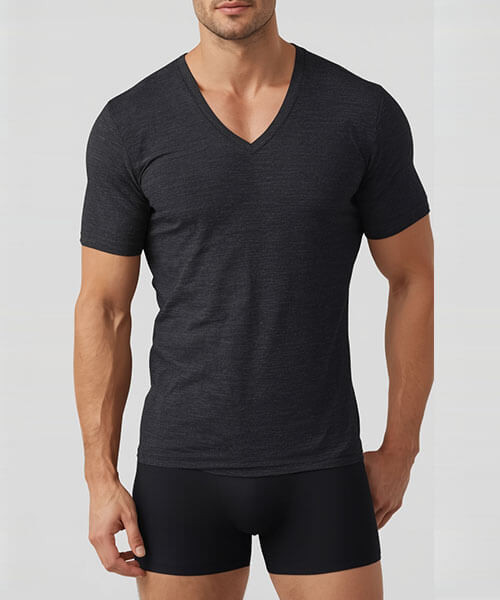
Check: Undershirts
Sino Finetex holds active OEKO-TEX certification covering its underwear, homewear, and sportswear categories. The company conducts all testing in ISO 9237-accredited laboratories, enabling brands to streamline regulatory compliance and reduce time-to-market by 2–3 weeks versus managing third-party testing independently. Complete test reports, safety certifications, and compliance documentation are provided with every production batch, de-risking export procedures and retail partner approvals across North America, the EU, and South America markets.
How Can Brands Specify Air Permeability Targets When Sourcing Breathable Apparel OEM Partners?
Best practice RFQs define target CFM range (e.g., “150–200 CFM per ASTM D737”), acceptable tolerance (e.g., “±5%”), and testing frequency (e.g., “pre-production sampling plus 5% of bulk rolls”). Benchmarking against competitor samples provides realistic CFM targets aligned with product positioning—value-tier underwear versus premium performance wear occupy different breathability spectrums. Higher CFM targets (250+ CFM) require looser weaves, thinner yarns, or minimal finish treatments, which reduce durability and increase manufacturing complexity; Sino Finetex helps brands balance breathability ambitions with cost efficiency and margin targets during the sampling collaboration phase.
Documentation rigor is essential: verify that the OEM’s testing lab holds ASTM D737 and ISO 9237 accreditation with NIST-traceable equipment. Request raw test data—not summary reports—to validate consistency across multiple production runs. Sino Finetex’s partnership model enables brands to collaborate with its R&D team during sampling to define optimal CFM targets, test prototypes, iterate on weave and fiber blends, and lock specifications before bulk production. This collaborative approach reduces risk of post-production breathability failures and ensures that final products deliver the comfort and performance claims central to brand positioning.
Why Should Brands Validate Air Permeability Compliance Before Bulk Production?
Breathability failures detected post-launch damage brand reputation, trigger customer returns, and erode retailer relationships. Pre-production CFM validation prevents costly mistakes. Rigorous testing during sampling quantifies the relationship between fabric structure, material composition, finish treatments, and actual wearer experience. Brands gain objective data supporting marketing claims and regulatory documentation, transforming breathability from subjective perception into measurable, defensible product specification.
Sino Finetex’s 20+ years of OEM/ODM experience across underwear, homewear, and sportswear has demonstrated that breathability validation is inseparable from customer satisfaction and repeat business. The company’s commitment to sustainable, eco-friendly manufacturing—supported by OEKO-TEX certification and ethical production practices—combines with rigorous air permeability testing to deliver products that meet both performance and environmental standards demanded by modern B2B apparel buyers and end consumers.
Conclusion
Air permeability testing via ASTM D737, ISO 9237, or EN 14683 transforms breathability from vague marketing language into measurable, specifiable performance metrics. CFM ratings directly influence wearer comfort, moisture management, and product differentiation—making breathability validation non-negotiable during OEM sampling and bulk production phases.
For B2B apparel buyers, rigorous air permeability testing during sampling de-risks bulk production, ensures regulatory compliance (OEKO-TEX, CE marking, EU export requirements), and prevents costly post-launch failures. Brands should demand ASTM or ISO-accredited testing reports, specify acceptable CFM ranges (±5%), and verify OEM in-line and pre-shipment QA protocols before committing to high-volume orders.
Sino Finetex’s vertical supply chain control—from yarn knitting through finish application—enables precision engineering of air permeability at every production stage. The company’s three fabric invention patents and 20+ compression garment software copyrights optimize CFM targets while maintaining durability and cost efficiency. With 500 skilled workers and 600,000-unit monthly capacity, Sino Finetex delivers consistent breathability validation across high-volume orders, supported by ISO 9237 testing capabilities and OEKO-TEX certification. For brands sourcing breathable apparel OEM solutions, this combination of technical expertise, quality assurance rigor, and supply chain integration reduces regulatory risk and accelerates time-to-market.
FAQs
What’s the difference between air permeability and moisture-wicking?
Air permeability (CFM) measures static air flow through fabric via ASTM D737 or ISO 9237. Moisture-wicking (ASTM D6775) measures dynamic liquid water transport away from skin. Premium sportswear requires both: high CFM improves air circulation; high moisture-wicking actively moves sweat away from skin. Sino Finetex tests dual performance via proprietary modal-blend formulations and compression garment algorithms to optimize both metrics simultaneously, ensuring superior comfort and performance.
Can air permeability change after garment washing?
Yes. Washing compresses fabric fibers slightly and can reduce CFM by 3–8% depending on wash temperature and detergent. Sino Finetex conducts post-wash CFM testing during pre-shipment quality assurance to ensure breathability remains within specification after consumer use. Brands should specify acceptable CFM post-wash tolerance in technical specifications—for example, “CFM ≥ 95% of target after 10 standard washes”—to establish realistic performance expectations.
Why does EN 14683 use lower pressure (100 Pa) than ASTM D737 (125 Pa)?
EN 14683 targets medical and high-performance compression textiles where tight weaves are structural requirements. Lower pressure threshold more accurately captures breathability in densely woven fabrics without over-stressing weave structure. ASTM D737’s higher pressure suits general apparel where weave flexibility is less critical. Choose standards matching your apparel category: ASTM D737 for everyday wear; EN 14683 for compression and performance wear; ISO 9237 for international export compliance.
How do OEM manufacturers prevent air permeability from varying batch-to-batch?
Strict process controls are essential: yarn denier tolerance ±2%, weave tension variance <1%, and finish application within ±0.5 g/m². Sino Finetex’s vertical integration eliminates supplier handoffs that introduce variability. In-line testing at fabric, post-finish, and pre-shipment checkpoints catches deviations early. Manufacturing 600,000 pieces monthly requires six-sigma-grade consistency—achieved via automated tension sensors, real-time CFM spot-checking, and the company’s proprietary compression garment algorithms.
What CFM range should my brand target for custom underwear versus sportswear?
Everyday underwear: 120–180 CFM (comfort and moisture control). Athletic/performance sportswear: 180–250 CFM (aggressive breathability and thermoregulation). Compression wear: 80–150 CFM (structure and controlled airflow). Thermal homewear: 60–100 CFM (heat retention). Sino Finetex can advise optimal CFM for your category and competitive positioning during RFQ evaluation—leveraging 20 years of manufacturing data across underwear, homewear, and sportswear segments to recommend specifications aligned with market expectations and margin targets.
