Most custom underwear projects do not fail at the sewing machine. They fail at the handover, when a design reaches a custom men’s underwear manufacturer as a set of intentions rather than a specification, and every gap is filled by an assumption that only surfaces in the bulk delivery.
This guide follows one order from tech pack to carton: what the specification has to contain, how cut, waistband and pouch decisions are locked, why fabric and elastane percentages are settled before patterning, what happens between the first fit sample and an approved size set, and which controls keep bulk production inside the approved specification. It is written for private-label founders and product managers who want the first bulk run to match the sample.
What does a production-ready tech pack contain?
Fit measurements, construction notes, trim BOM and labels.
A production-ready tech pack carries the graded size chart with tolerances, construction notes, the fabric and trim list, the label artwork and the packing instruction.
A tech pack is not a mood board with measurements on it. It is the document that allows a pattern maker, a fabric buyer and a sewing line to work in parallel without asking the brand what was meant. The distinction shows up in the questions a factory asks back: a complete pack produces technical queries about tolerance and construction, while an incomplete one produces requests for information the brand already believed it had supplied. The table below shows which element of the pack fixes which decision, and the typical consequence of leaving it out.
| Tech pack element | Decision it fixes | What happens without it |
|---|---|---|
| Graded size chart with tolerances | How the pattern is graded from the base size to the extremes | Fit is judged at one size; bulk complaints arrive from the ends of the run |
| Construction notes and seam schedule | Where seams, bonding and joining sit on the garment | The factory chooses a method that is cheaper or faster than intended |
| Fabric specification and weight | Which knit, which blend and which gram weight the pattern is built for | Substitution changes drape, recovery and the way the garment measures |
| Trim bill of materials | Elastics, threads, care labels and brand labels, with placement | Trims are sourced late, often from a different supplier at a different quality |
| Label artwork and packing instruction | What is printed on the piece and how it is folded and bagged | Goods arrive correct but not sellable, and rework is billed back to the brand |
If your pack is still a work in progress, the practical test is whether an unfamiliar pattern maker could cut the first sample without contacting you. Anything that would trigger an email belongs in the pack, including the details you consider obvious.
Choosing cuts, waistband and pouch construction at a custom men’s underwear manufacturer
Construction choices are commercial decisions dressed as technical ones. Briefs, boxer briefs, trunks and jockstraps differ not only in coverage but in how many operations they require, and each additional operation adds cost, lead time and a place for fit to vary. Deciding this early, with the factory’s costing in front of you, prevents a redesign halfway through sampling.
Work through the following in order:
- Cut and rise. Coverage, leg opening and rise determine the pattern block; changing any of them later invalidates the graded size chart.
- Waistband construction. Knitted elastic, woven elastic and jacquard branding each behave differently in wear and wash, and each has a different minimum for custom weaving.
- Pouch and front panel. A cut-and-sewn panel, a bonded panel and a knitted-in construction produce different silhouettes and different seam patterns.
- Leg and hem finish. Banded, bonded or folded hems change the way the garment holds tension through movement.
- Decoration. Jacquard logos, printed labels and heat-applied branding sit at different stages of production, which changes both cost and minimums.
Ask the factory to cost the options side by side rather than quoting a single specification. Comparing three constructions at the sampling stage is cheaper than comparing them after the first bulk run has been cut, when the pattern, the trims and the size set all have to be rebuilt. For a product-level view of how these choices map onto finished styles, the boxer brief range shows how the same block is adapted across constructions.
Fabric and elastane selection before patterning
Fabric decisions belong before pattern making because the pattern is built around the behaviour of a specific knit. A cotton-modal blend and a nylon-elastane blend stretch, recover and drape differently, and a pattern graded for one will not fit correctly in the other. The elastane percentage matters most: it sets recovery, and recovery is what keeps a garment in shape through repeated washing rather than through the first wear.
Four questions decide the fabric route:
- What is the intended end use, and does the blend support it over the life of the garment rather than at the first fitting?
- What gram weight does the construction require, and is that weight available in the chosen blend?
- Is the fabric held in stock or knitted and dyed to order? This determines both the minimum quantity and the development calendar.
- Do the skin-contact materials and the dyestuffs meet the chemical requirements of the destination market?
Where the fabric must be tested rather than assumed, ask for results from recognised methods. Tensile and elongation behaviour is commonly measured using standards such as ASTM D5035, while colourfastness and appearance retention after laundering are covered by AATCC test methods. Material safety for skin-contact textiles is separately certified: OEKO-TEX STANDARD 100 addresses harmful substances, and GOTS addresses organic fibre content and processing. Where recycled fibre content is part of the brand story, the standards published by Textile Exchange define how that content is verified and claimed.
Pattern making and the first fit sample
Pattern making converts the specification into geometry, and the first fit sample is the only cheap opportunity to disagree with it. The goal of this round is not to approve the garment but to isolate the variables: whether the block is right, whether the fabric behaves as assumed, and whether the construction notes were read as written. Settling one question at a time keeps the revision history legible, which matters when the second and third rounds arrive. Sino Finetex develops patterns and samples inside its own R&D centre, with the supply chain running from yarn to finished garment, so a fabric or construction change is assessed by the same team that will produce the order.

Make the feedback specific enough to act on. “Too tight” produces a guess; a marked-up measurement chart with the corrected value, plus a photograph of the problem area worn on a body, produces a change. Record every approved revision against a version number, and confirm in writing which version the next round will be built from, so that neither side is working from a superseded file.
Keep the base size constant across rounds. Brands that change the sampling size mid-development lose the ability to compare rounds, and end up paying for extra samples to re-establish a baseline they already had.
Size sets and wear testing
One approved sample proves a pattern at one size. A size set proves that the grading is correct, and it is the step most often skipped by brands trying to compress a calendar. Because most fit complaints originate at the ends of the run rather than at the base size, skipping the size set converts a manageable sampling cost into a bulk problem, where the affected units have already been cut, sewn and packed.
Before approving the set, confirm the following:
- The smallest and largest sizes in the run are both measured against the size chart, not only the middle size
- Waistband tension has been checked across the run, since elasticity behaves differently at the extremes
- Leg openings and rise have been assessed on more than one body type within each size
- Wear testing has covered washing, drying and repeated donning rather than a single fitting
- Measurement tolerances have been agreed in numbers, with a stated method for how each dimension is measured
Agree the measurement method before the size set is cut. Two people measuring the same garment in different places will disagree, and that disagreement is expensive when it happens at a final inspection rather than at a sampling review.
Bulk cutting, sewing and finishing controls
Bulk is where specification discipline is either visible or absent. The controls that matter are unglamorous: fabric inspected on receipt against the approved quality, the cutting spread matched to the approved pattern, and the first pieces off each line measured against the sealed sample before the run continues. Factories that report these checks in writing are also the ones whose batch records hold up when a claim is raised months later.
The minimum control set for an underwear run covers fabric inspection and shrinkage, cutting accuracy and fabric yield, in-line measurement at defined intervals, seam and elastic strength, needle detection where metal contamination is a risk, and final inspection against an agreed sampling plan. Ask to see the record format used for each before production starts, not after.
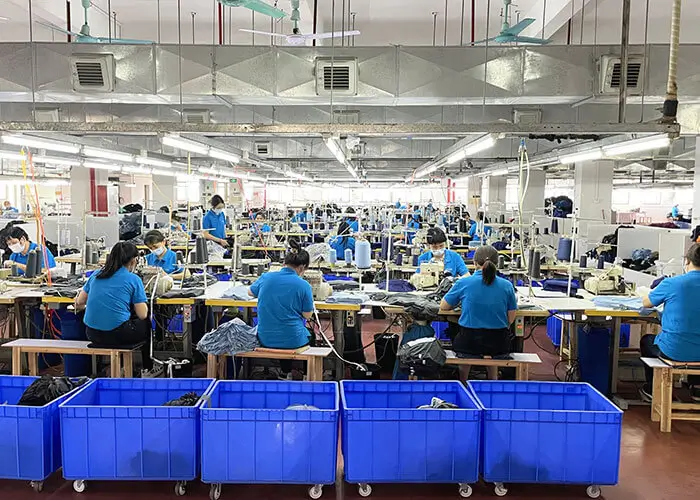
Ask how a batch is identified once it leaves the line. A traceable batch number links the finished carton back to the fabric roll, the cutting spread and the inspection record, which turns a quality dispute into a lookup instead of an argument.
Labelling, folding and retail-ready packing
Packing is the last stage where a correct product can still become an unsellable one. A care label that does not travel with the garment, a fold that does not match the retail presentation, or a size label placed where the design did not intend it will all be discovered by a buyer rather than by the brand, and correcting them after arrival costs more than every other fix in this article.
Care symbols follow the international care labelling system maintained by GINETEX, which standardises the meaning of the symbols used across markets. For the United States, fibre content, country of origin and care information are governed by the rules at 16 CFR Part 303. Confirm the wording for each market before the artwork is printed, because the label is a legal statement about the garment and the brand owns it.
On the packing side, agree the fold or hang presentation, the polybag or box, the size and colour sticker placement, and the carton configuration with weights and dimensions. Then ask for a packed sample to be approved alongside the sealed garment sample, so the reference for the packing team is a physical object rather than a written instruction.
What drives the timeline and cost from tech pack to bulk?
Sampling rounds, size sets, fabric lead time and finishing.
Four factors set the calendar and the invoice: sampling rounds, whether a full size set is graded, the lead time of the chosen fabric, and the finishing and packing required.
Development cost and production cost behave differently. Sampling rounds and size sets are development costs, paid once per style, while fabric, construction operations and finishing are unit costs that recur on every order and scale with volume. Confusing the two leads brands to economise on the wrong line item: cutting a sampling round saves a small amount once, and risks a bulk run whose fault is only visible after the fabric has been cut.
| Driver | Why it moves the number | How to control it |
|---|---|---|
| Sampling rounds | Each round consumes pattern time, fabric and sewing capacity | Consolidate feedback into one instruction per round and fix the base size |
| Size set grading | Grading adds pattern work and a full set of sample pieces | Approve the size chart before patterning rather than during sampling |
| Fabric lead time | Stock fabric ships from inventory; custom knits and dyes need their own run | Choose the fabric route first, because it sets the minimum and the calendar |
| Construction operations | Every added panel, seam or decoration step adds labour and time | Cost the construction options side by side before committing |
| Finishing and packing | Retail presentation, labelling and carton configuration are manual steps | Approve a packed sample and a carton specification before bulk |
Where sustainability claims form part of the range, they follow the same discipline: the fibre content, the certification scope and the supporting documentation are settled at specification stage, not added to the marketing copy afterwards. The sustainability overview sets out how material choices are documented.
Conclusion
Rework is almost always the cost of an unresolved decision rather than a mistake on the line. Locking fit measurements with tolerances, construction, fabric specification and trim placement before pattern making removes the ambiguity that bulk production amplifies. Approving a size set rather than a single sample catches the grading faults that generate most complaints. Reporting batch-level controls in writing keeps the run inside the specification and makes any claim traceable. Brands that follow this order typically spend slightly more on development and materially less on correction, which is the trade this process exists to make explicit.
FAQ
Can I start custom men’s underwear production without a full tech pack?
You can start with less, and the factory will fill the gaps with its own defaults. Those defaults are reasonable choices, but they are not your choices, and they are difficult to unpick once a pattern has been graded. At minimum, supply a graded size chart with tolerances, the fabric specification, the trim and label placement, and the packing instruction.
How long should the first fit sample take, and how many rounds are normal?
Plan on two to three rounds for a new construction: a first fit sample, at least one revision, and a size set built on the approved base size. Ask the factory to quote the calendar for each round before you start, and keep the sampling size constant so rounds stay comparable. A proven block from an existing style usually needs fewer rounds, while a new construction with a different fabric or waistband needs more room in the schedule.
Should the fabric be chosen before or after the pattern is made?
Before. The pattern is built around the stretch, recovery and drape of a specific knit and gram weight, so a change of fabric after grading invalidates the fit work. Choose the blend and the weight first, confirm whether it is stock or made to order, then start patterning against that specification. Where recycled or organic content is part of the range, settle the certification scope at the same time, because the supporting documents follow the fibre decision.
What should be approved before bulk production begins?
Four items: the sealed pre-production sample made on the production line, the graded size set with written measurements, the label and packaging artwork for each destination market, and the packing and carton specification. Bulk should begin only after all four are approved in writing, with the approved versions retained as the inspection reference. If the label artwork is not final, agree a date for approval and hold the bulk release until it is met.
Send your tech pack for a development review
Share your specification, fabric preference, target quantities and destination market, and the Sino Finetex team will return written comments on construction, sampling gates, minimum quantities and the production controls that apply to your style.
Explore the related decisions in the Underwear Quality and Compliance.