
Illustrative situation
A streetwear brand plans its first fleece collection and the designer wants a pullover, a zip-up and a crewneck all in the first drop. The buyer asks which to prioritise and how many of each to order.
Main answer
Build a hoodie range around a core pullover hoodie, then add a zip-up for layering and a crewneck sweatshirt for customers who dislike hoods, and order the largest share of the style your customers already ask for most. Use the same fleece across styles at first so you can reuse patterns, trims and dye lots.
The pullover
The pullover hoodie, with a kangaroo pocket and a drawstring hood, is the best known style and the simplest to cut and sew. It suits a first order and works across seasons in mild climates. The hoodie manufacturer page shows variations a factory can make.
The zip-up
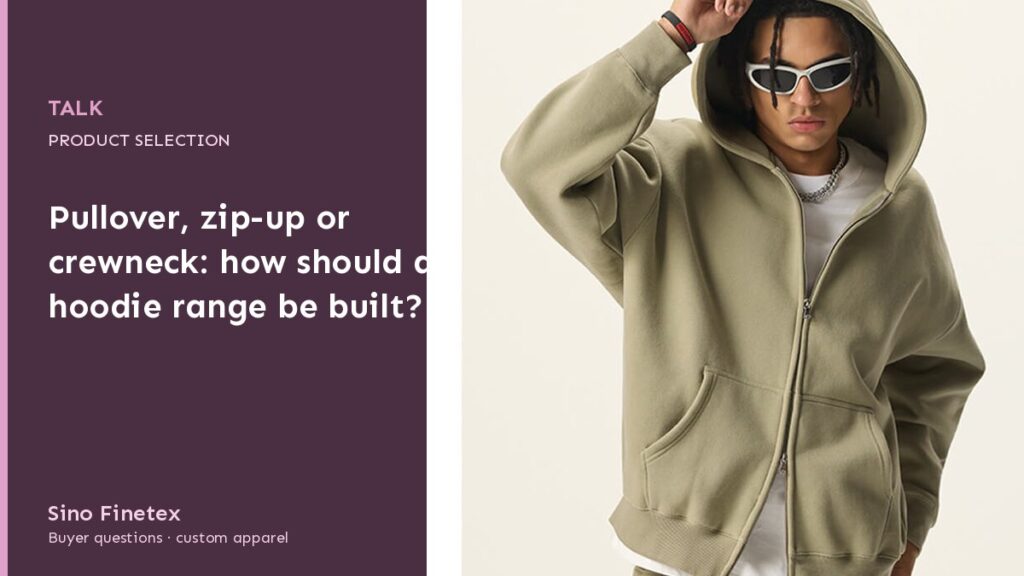
A zip-up hoodie is easier to put on and take off and works as a layering piece, but it adds a zip, zip tape and a placket, which means more parts to check and more cost. Ask for a sample and test the zip for smooth running, and check that the hem does not ripple at the zip.
The crewneck
A crewneck sweatshirt has no hood, so it uses less fabric and sits well under jackets. It appeals to customers who do not like hoods or who want a smarter look. It can share the fleece, colours and print areas with the hoodie.
Weight and season
Choose a fleece weight for your climate before choosing styles. A heavier fleece suits cold seasons and streetwear, a lighter one suits mild weather and layering. Keep the same fleece for all three styles in the first drop, and test a second weight later once you know which style sells.
Planning quantities
Split the order by past demand or test sales: more pullovers, fewer zips and a small crewneck run. Keep colours to a few, and keep sizing consistent across styles so that customers know their size. Review sales before reordering.
Fact, recommendation, uncertainty
- Established fact
- A pullover, zip-up and crewneck can share fleece, colours and many patterns, but the zip-up adds zip, placket and hem details that need extra checks.
- Recommendation
- Start with the pullover as the core, add a zip-up and crewneck in smaller runs and reuse fabric across them.
- Uncertainty
- Demand varies by market and climate, and the mix should follow your own sales data.
Sources and further reading
No single official source defines this, so this answer is a recommendation based on how production and buying are commonly organised. Confirm every figure and term in your own quotation.
More perspectives from the team
Three further views on the same question, each by function. They add conditions and limits to the main answer; they are editorial notes, not customer reviews.
Sino Finetex Editorial Team Sourcing
Ask the factory for a combined fabric order across styles to meet fleece minimums. Limit: matching dye lots across several styles needs one batch of fabric. Ask for sample weights in writing.
Sino Finetex Editorial Team Product selection
Offer one hooded and one non-hooded option so customers can choose, and keep colours aligned. Limit: too many options split the order into small, hard-to-reorder quantities. Try one lighter option later.
Sino Finetex Editorial Team Quality & care
Check zip operation, hood shape and hem tension on each style before bulk. Limit: a style that fits well in one size can ripple in another, so check the full size run. Check the fit of each style.
Related products
- M8319 Brushed Fleece Hoodie
Sino Finetex product page
- M8307 Acid Wash Hoodie Manufacturer
Sino Finetex product page
- M8315 Contrast Stitch Hoodie
Sino Finetex product page
- DY007 400g Heavyweight Double Yarn French Terry Hoodie
Sino Finetex product page
Related articles and topics
- TalkWhat fabrics and styles suit a first sleepwear range?
- TalkWhich underwear styles should a new brand start with?
- TalkHow should tank tops and muscle shirts fit into a retail range?
- Zip-Up Versus Pullover Hoodies: Manufacturing Differences
- Pullover Hoodie Manufacturer: Pattern, Weight and Hood Construction
- Crewneck Sweatshirts vs. Hoodies: Choosing the Right Silhouette
- Zip Up Hoodie Manufacturer: Zipper Quality and Construction That Lasts
- Why do athletes prefer zip hoodies over pullovers?
- What Is a Sweatshirt Without a Hood Called? Comprehensive Style, History, and Sourcing Guide
