A first underwear order is rarely lost on price. It is lost between the sample and the third production run, when fit drifts across the size run, a care label blocks a retail listing, or the minimum quantity triples the moment the fabric changes.
This is a vetting sequence for brand founders, importers and distributors shortlisting a men’s underwear manufacturer for the first time. It covers what to compare before you contact a factory, which documents to request, how capacity and fabric answers expose real depth, where the sampling gates sit, what export markets expect on compliance, and how a two-tier minimum order structure should be applied to a pilot.
What do buyers compare before they contact a factory?
Fit consistency, MOQ tier, sampling gates, compliance cost.
Shortlists come down to four variables: fit consistency across the size run, the minimum order that applies to your chosen fabric, how many sampling rounds are included, and the compliance the factory can document.
Price is a consequence of those four, which is why experienced buyers settle them before requesting a quotation. A factory quoting 300 pieces and a factory quoting 3,000 pieces are not describing the same product: fabric source, colour method, trim quality and inspection depth all move with volume. Comparing quotations before those variables are fixed produces a shortlist built on a fiction.
The table below sets out what a first-contact comparison should cover, and what a convincing answer looks like at each point.
| Decision area | What the buyer verifies | What a strong answer looks like |
|---|---|---|
| Fit consistency | Grading across the whole size run, not just the sample size | A size set produced before bulk, with measurement tolerances stated in the specification |
| Minimum quantity | Which fabric and colour the minimum actually applies to | Minimums split by fabric type and by colour, stated per style in writing |
| Sampling | Rounds included, cost per round, and time per round | Fit sample, revision round and size set defined upfront with dated milestones |
| Compliance | Which documents are held for your destination market | Fibre labelling, chemical compliance and test reports named for the market and the standard edition |
| Capacity | Where knitting, dyeing, cutting and finishing physically happen | In-house stages confirmed, outsourced stages named, and the split explained without prompting |
Run the same five questions past every candidate and record the answers in one sheet. Suppliers that answer precisely, in the same format, are usually the ones whose production reporting is also consistent.
Documents to request from a men’s underwear manufacturer before any sample
Document requests feel bureaucratic until something goes wrong, at which point they are the difference between a claim and a conversation. The purpose is not to collect paperwork but to test whether the factory can produce accurate operational records on demand, which is the same capability you will rely on when a shipment needs a certificate or an inspection report.
Ask for the following before paying for a sample:
- Business licence with the registered scope of activity and registered address
- Factory floor area, ownership or lease status, and whether the site you are shown is the site that will produce
- Machinery list by process stage, with gauge and capacity ranges for knitting and sewing
- Quality control workflow with inspection stages, sampling plans and the record template used per batch
- Fabric and trim supplier list, including which items are held in stock and which are made to order
- Certificates with the exact standard, edition, scope and expiry, plus the product line each one covers
- Recent test reports for a comparable fabric and colour, not for a different product family
- Named contacts for merchandising, sampling and quality, rather than a single sales address
Social compliance programmes such as amfori are worth asking about directly. A factory that holds a recent audit report and can explain the findings, including open corrective actions, is describing its own operation rather than reciting a membership.
Capacity signals: knitting, dyeing, cutting, finishing
Capacity questions are really questions about control. When knitting, dyeing, cutting and finishing sit under one roof, the factory can sequence work around your delivery date and trace a fault to a stage. When a stage is outsourced, the factory is buying capacity on your behalf, and its ability to protect your date depends on the relationship it holds with that subcontractor.
Neither model is automatically better. What matters is knowing which one you are buying, because the answer determines your minimum quantity, your colour consistency and your realistic lead time. The table below maps each production stage to the question that reveals the most.
| Stage | What to ask | Why it changes your order |
|---|---|---|
| Knitting | Machine count, gauge range, and whether seamless and circular knits are both produced in-house | Determines which fabric constructions are available and what volume a custom knit requires |
| Dyeing | In-house dyehouse or commissioned dyehouse, plus per-colour minimums | Drives colour consistency across repeats and the minimum quantity per colour |
| Cutting | CAD nesting, spreading and laser cutting capability | Affects fabric yield, size-run accuracy and the cost of a graded size range |
| Sewing and finishing | Line count and operator skill by product family | Sets throughput and how reliably fit is repeated batch to batch |
| Packing | Folding, labelling and carton control standards | Determines whether goods arrive retail-ready or need rework at your warehouse |

A useful stress test is to ask which stage would delay a delivery if demand doubled. Factories with real capacity visibility answer in production terms; factories without it answer in assurances. For a full walkthrough of supplier selection, including how seamless capacity changes the picture, see how to find a seamless underwear manufacturer.
Fabric and trim questions that reveal depth
Fabric conversations separate factories that buy cloth from factories that understand it. The questions below are not tests to trip a supplier up; they are the same questions your own product team will face once the range is live, and the quality of the answers predicts how much support you will receive during development.
- Which fibre blend fits the intended end use, and what happens to recovery and shape retention as the elastane percentage rises?
- Which fabrics are held in stock, and which are knitted or dyed to order? This is the single question that most often changes the minimum order.
- How is the waistband constructed, and how does it hold tension across the size run rather than only at the base size?
- Is the pouch or front panel cut and sewn, bonded, or knitted as part of the body? Each route carries a different cost and a different failure mode.
- Which trims, elastics and threads are used, and are the skin-contact materials certified?
- What test data exists for colourfastness and dimensional stability after repeated washing, and for which specific fabric and colour?
Material safety claims deserve a specific answer. OEKO-TEX STANDARD 100 covers harmful substances in textiles intended to come into skin contact, and GOTS covers organic fibre content and processing requirements through the supply chain. Both certify against a defined scope, so the useful question is not whether a factory “has certification” but which materials, which production site and which standard edition the certificate names.
Sampling gates: fit sample, size set, approval
Sampling is where a project is either de-risked or quietly over-committed. The sequence matters more than the number of samples, because each gate exists to catch a specific class of failure before it is multiplied by a full production run. Insist on written approval at every gate, with the approved piece retained as a sealed reference.
- Technical review. The factory reads the tech pack and returns written comments on construction, tolerances and any specification it believes is unworkable.
- Fit sample. One piece per style in the agreed base size, made in the intended fabric, not a substitute.
- Revision round. Measurements and construction corrected, with the changes recorded against the original specification.
- Size set. The graded range produced so that fit is verified at the extremes, where most complaints originate.
- Pre-production sample. Made on the production line with the final trims, labels and packing, then sealed and signed by both parties.
- Written release. Bulk starts only after the sealed sample and the labelling artwork are approved in writing.
Ask for the dated milestones attached to each gate before the order is placed. A factory that quotes sampling gates as a schedule is describing a process; one that quotes them as an activity is describing an intention. Where the site visit itself is the objective, the factory audit checklist sets out what to verify on ownership, machinery and quality staffing.
Compliance and labelling for export markets
Adult underwear is a low-risk product category with high-consequence labelling rules. The recurring failures are mundane: fibre content stated in the wrong order, a care instruction that does not match the tested behaviour of the fabric, or a chemical restriction that applies to a trim nobody checked. None of this is exotic, and all of it is cheaper to resolve before the goods leave the factory.
| Market | Labelling | Chemical and product safety |
|---|---|---|
| United States | Fibre content, country of origin and care information under the Textile Fiber Products Identification Act rules at 16 CFR Part 303; country of origin marking is separately required under 19 CFR Part 134, and the FTC labelling guidance explains how the textile rules apply to garments | State chemical requirements, including California Proposition 65 exposure warnings where applicable |
| European Union | Fibre names and composition under the EU textile labelling framework, with care symbols following the international care labelling system | REACH restrictions on substances in textile articles, plus the traceability and product safety duties that apply to consumer goods placed on the EU market and are enforced through market surveillance coordinated via the EU Safety Gate rapid alert system |
| Other destinations | Fibre content and origin labelling, usually with a local-language requirement | Chemical restrictions and conformity documentation that vary by country; confirm before the label artwork is finalised |
Ask the factory to name the person responsible for labelling compliance and to return the label content for review in writing. The brand owns the claim on the label, which means the brand carries the corrective cost if the wording is wrong.
The two-tier MOQ model applied to a first order
Generic “low MOQ” claims are the least useful number in a sourcing conversation, because a minimum is meaningless without the fabric it applies to. Sino Finetex operates a two-tier structure that separates a quick-response stock programme from bulk OEM/ODM production, and the practical value of that split is that it lets a brand validate a design before committing to a fabric run.
| Tier | Typical quantity | Best used for | Trade-off |
|---|---|---|---|
| Quick-response stock runs | About 20 to 50 pcs per style and colour | Validating a design, a colour or a market response on stock fabric | Limited fabric and colour choice, and a higher unit cost per piece |
| Bulk OEM/ODM on stock fabric | About 1,000 pcs per colour | Building a core range once a style has proven sell-through | A fabric commitment and a longer production schedule |
| Custom or printed fabric | About 3,000 pcs per colour | Exclusive colours, prints and constructions that no other brand holds | The largest commitment and the longest development cycle |
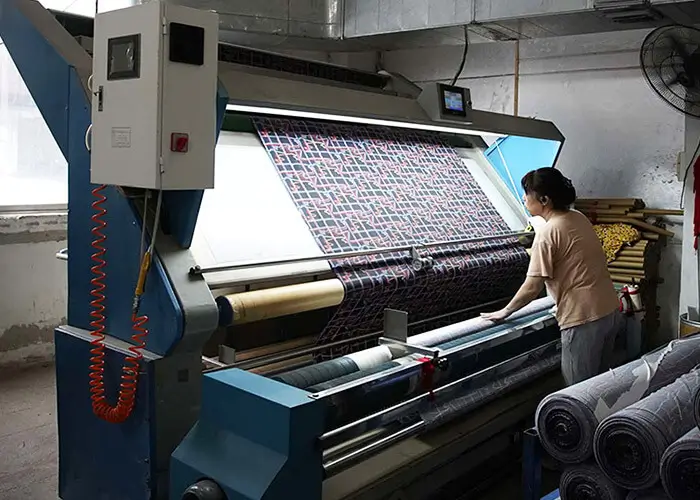
The sequencing that protects a first order is straightforward: buy into the stock tier to test the fit, the colour and the conversion rate, then move the winning styles into the bulk tier with the fabric locked in advance. Brands that skip the pilot usually discover the fabric problem at a volume where it is expensive to correct.
Which red flags should end the conversation?
Minimums that move, no size set, certificates without scope.
Three answers end it early: a minimum that changes with the fabric, no pre-production size set, and certificates offered without a named standard and scope.
Those three point at the same underlying weakness, which is a supplier that manages expectations rather than production. Everything else on this list is a symptom of that pattern and, in most cases, the pattern does not improve after the order is placed.
- A minimum quantity that rises only after pricing has been discussed
- No size set, with bulk promised directly from a single fit sample
- Certificates shown for a different product family, market or production site
- Sampling quotes without dates, or dates that move without a written reason
- Inspection reports described but never shared, or shared with the batch fields blank
- A single contact who answers technical questions with sales language
- Reluctance to name the stage of production that is outsourced
None of these require a confrontation. They require a decision, and the cheapest moment to make it is before a purchase order exists.
Conclusion
Vetting a men’s underwear manufacturer is mostly an exercise in sequencing. Fix the four comparison variables before requesting quotes, request documents before paying for samples, confirm which production stages the factory actually controls, verify that material and chemical claims name their scope, and treat sampling as a series of approval gates rather than a single round. Apply the two-tier minimum model deliberately: a small stock-fabric run to prove the design, then a bulk commitment on a proven style. Suppliers that answer all of it in writing tend to be the ones whose production reporting holds up once the order is live.
FAQ
What is a realistic minimum order for a first men’s underwear run?
It depends on the fabric, not on the style. A quick-response stock programme can start at roughly 20 to 50 pcs per style and colour, while bulk production on stock fabric typically starts near 1,000 pcs per colour, and custom or printed fabric near 3,000 pcs per colour. Ask which fabric your quote is based on before treating any figure as final.
How many sampling rounds should a first order include?
Plan for a fit sample, at least one revision round, a graded size set and a sealed pre-production sample. The count matters less than the gates: measurements should be approved in writing at each stage, and the final sample should be made on the production line with the actual trims and labels before bulk begins. A proven block carried over from an existing style usually needs fewer rounds, while a new construction typically needs three.
Which certificates should an underwear supplier provide?
Request the certificate for the material and process you are buying, not the factory’s full portfolio. For skin-contact fabrics that usually means an OEKO-TEX STANDARD 100 certificate, and for organic cotton a GOTS scope certificate. Check the named product, production site, standard edition and expiry date on each document, and treat an expired or differently scoped certificate as absent. Confirm that the named site is the one that will run your order.
How do I compare two underwear factories quoting the same price?
Compare what the price includes. Ask each factory to state the fabric and its source, the minimum per colour, the sampling rounds included, the inspection stages with a sample report, and the labelling support for your market. The lower quote often omits a stage that the higher quote funds, such as a size set or a pre-shipment inspection. Request the same breakdown from both factories in one format so the comparison stays like for like.
Review your specification with the Sino Finetex team
Share your style, target quantities, fabric preference and destination market, and the team will return a written response covering minimum quantities, sampling gates, labelling requirements and the production stages involved.
Explore the related decisions in the Choosing an Underwear Manufacturer.