
Strategic logo placement on ergonomic compression tees balances brand visibility with garment performance. Key zones are the upper chest, upper back, and sleeve, avoiding high-stretch areas like side seams and major muscle flexion points. Using flexible, breathable print or knit-in techniques ensures the logo moves with the fabric, maintaining comfort and the tee’s technical benefits.
Which Custom Branding Method Works Best for Private Label Seamless Tees?
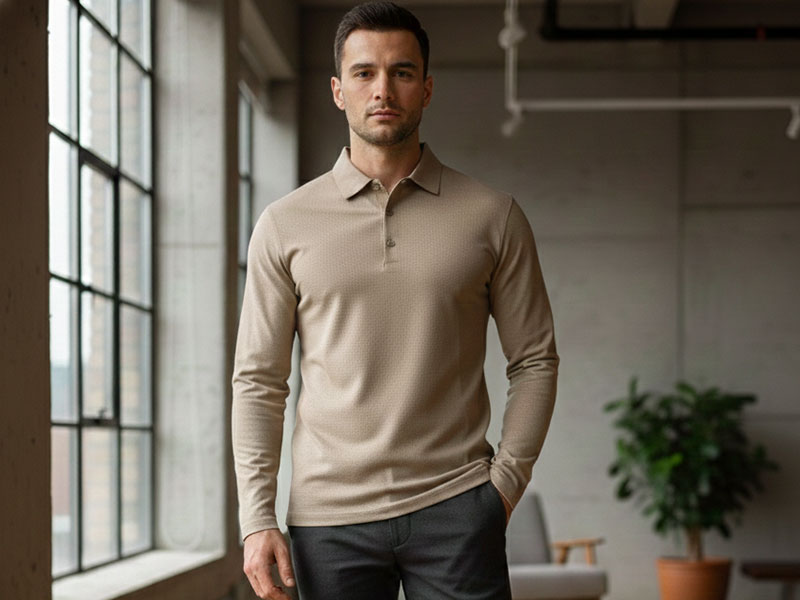
What Makes the 2026 Seamless Polo & T-Shirt Series a Best-Seller?
Our Seamless Series is the hottest trend of 2026! With irritation-free, seamless construction, enjoy all-day smooth comfort. Breathable, moisture-wicking fabric keeps you cool and confident anywhere.Why is logo placement critical for compression garment function?
Proper logo placement is essential because it preserves the biomechanical integrity and dynamic fit of the garment. Incorrect placement over stretch zones can create restriction points, hindering muscle movement, altering blood flow dynamics, and causing premature wear on the print or fabric itself.
Think of a compression tee as a second skin engineered to apply precise pressure gradients. When a stiff logo is placed directly over a high-movement area like the shoulder or elbow, it acts like a patch of glue on a rubber band. That localized section cannot stretch and recover with the same elasticity as the surrounding fabric. This not only creates an uncomfortable “tugging” sensation for the wearer but also fundamentally disrupts the garment’s engineered performance. The compression becomes uneven, potentially impeding circulation or muscle oscillation rather than supporting it. Furthermore, from a durability standpoint, constant stretching of a printed or bonded logo will lead to cracking, peeling, and a degraded appearance. So, isn’t the primary goal of athletic wear to enhance performance, not hinder it? By treating the garment’s stretch map as a blueprint, brands can ensure their mark complements the design, becoming an integrated part of the product’s function rather than a functional afterthought.
What are the primary and secondary logo zones on a compression tee?
The primary logo zones are the upper chest (left or center) and upper back (between shoulder blades). Secondary zones include the sleeve (mid-bicep) and the lower side seam (above the hem). These areas experience minimal multi-directional stretch, making them ideal for branding that won’t compromise fit.
Let’s break down the anatomy of a compression tee to understand these zones. The primary zones are essentially the “anchor points” of the garment. The upper chest and upper back are relatively stable areas; they expand and contract primarily with breathing, not with the large, dynamic movements of the limbs. Placing a logo here ensures maximum visibility (front and back) without interfering with the core function. The sleeve, specifically the mid-bicep region, is a popular secondary zone. But why there and not lower? The bicep area expands primarily in circumference during a flex, not in length. A properly sized logo here will experience concentric stretch, which most flexible prints can handle. Conversely, placing a logo near the elbow or armpit subjects it to complex, multi-axial stretching that is far more demanding. Practically speaking, the lower side seam, just above the hem, is another discreet secondary option. It’s away from major sweat zones and sees limited stretch. For brands working with a partner like Sino Finetex, leveraging their expertise in garment fitting can pinpoint these zones with millimeter precision during the sampling phase, ensuring optimal placement from the first prototype.
| Zone | Stretch Level | Best For |
|---|---|---|
| Upper Chest/Center Back | Low (Uni-directional) | Primary Logo, Larger Prints |
| Mid-Bicep (Sleeve) | Medium (Concentric) | Secondary Logo, Sponsor Patches |
| Lower Side Seam (Above Hem) | Low | Discreet Branding, Size Tags |
How do different branding methods affect placement choices?
The chosen branding technique directly dictates viable placement options. Knit-in jacquard logos are fully integrated and can be placed almost anywhere, while silicone ink prints and heat transfers have specific elasticity limits and perform best in low-to-medium stretch zones.
Not all logos are created equal, and their construction method is a major factor. A knit-in (or jacquard) logo is woven directly into the fabric structure by the knitting machine. This creates a logo that is literally part of the garment—it shares the same base yarns and, crucially, the same stretch and recovery properties. This allows for greater placement flexibility, even venturing into moderate-stretch areas with minimal risk. On the other hand, applied methods like screen printing (especially with plastisol), silicone ink printing, or heat-transfer vinyl add a new layer on top of the fabric. This layer has its own physical properties. While modern flexible silicone inks and breathable transfers have come a long way, they still create a localized change in the fabric’s hand feel and elasticity. They must be confined to zones where the underlying fabric’s stretch is predictable and not excessive. For instance, a detailed multi-color heat transfer might look great on the stable upper back but would crack and peel if placed over the constantly moving scapula. Pro Tip: Always request a wear-and-stretch test on physical samples from your manufacturer. Seeing how the logo behaves after 50+ stretch cycles is the only true test of a placement’s viability.
Inside Sino Finetex: The Factory Trusted by Global Brands
Over 20 years of expertise, trusted by leading global brands worldwide. From premium fabrics to finished products — including underwear, loungewear, and sportswear — we deliver quality at every step.
What are the key considerations for logos on seamless compression tees?
For seamless construction, logo placement must account for the circular knit structure and the absence of side seams. The garment’s tension map is different, often making the standard upper chest and back positions even more critical, as they align with the body’s natural “non-stretch” planes.
Seamless tees, a specialty of advanced manufacturers like Sino Finetex, present a unique canvas. Knit in one continuous tube, they eliminate chafing side seams and can offer more consistent, targeted compression. However, this also means the fabric’s tension and stretch are engineered through the knit program itself, not through cut-and-sew panels. The traditional “safe zones” remain largely the same, but precision is paramount. A logo placed even a few centimeters too low on the chest might drift into an area designed for ribcage expansion. Furthermore, the application method becomes even more crucial. A heavy, stiff print can create a “dead zone” in the otherwise uniform knit, disrupting the seamless feel. This is why knit-in branding or ultra-thin, laser-etch-like techniques are often preferred for high-end seamless performance wear. Beyond aesthetics, consider the technical purpose. If the tee is designed for recovery, placing a logo on a major muscle group like the quad or hamstring (on longer compression tops) could theoretically insulate that area and slightly reduce the targeted compression’s efficacy. The guiding principle is to enhance, not interrupt, the seamless advantage.
| Consideration | Seamless Tee Impact | Recommendation |
|---|---|---|
| Garment Structure | No side seams; tension is knit-programmed | Use knit-in logos or apply only on programmed low-stretch zones |
| Stretch Map | More uniform, but with engineered gradient tension | Consult the manufacturer’s technical knit diagram for precise placement |
| Comfort & Feel | Any added layer is more noticeable | Prioritize the thinnest, most breathable application methods available |
How does fabric composition influence logo application and placement?
The fiber blend and fabric weight determine how a garment recovers from stretch and how well it bonds with applied logos. High-elastane content fabrics (e.g., 15-20%) require the most flexible branding methods, while stable blends can tolerate a wider range of techniques but still have optimal zones.
Fabric is the foundation, and its behavior dictates everything. A compression tee with a high percentage of spandex (Lycra or elastane) is engineered for extreme stretch and snap-back recovery—often over 200% elongation. This is fantastic for performance but challenging for applied logos. The logo’s adhesive or ink film must be able to stretch and recover at nearly the same rate, hundreds of times, without delaminating. If the fabric recovers faster than the logo layer, the logo will buckle and peel. This inherently restricts placement to areas where the stretch is less extreme. Conversely, a lighter, more stable blend (like a nylon-polyester mix with lower elastane) used in base layers has a more modest stretch profile. While this allows for slightly more placement freedom, the core principle remains: avoid direct overlap with primary joint and muscle flexion points. So, what’s the first step? Always test your specific logo application on swatches of the exact production fabric. A silicone print that works on a 180gsm fabric may fail on a 220gsm version of the same blend. Partnering with an expert manufacturer ensures these material science considerations are addressed in pre-production.
What are common logo placement mistakes to avoid?
Common errors include placing logos over major joint articulations (shoulders, elbows), ignoring multi-directional stretch zones (armpits, sides), using overly large or stiff logos, and neglecting the wearer’s sensory experience (creating itchy or abrasive spots). These mistakes compromise both durability and comfort.
Avoiding pitfalls is just as important as following best practices. The most frequent mistake is treating a compression tee like a standard cotton t-shirt for branding purposes. Placing a large, rigid logo across the shoulder seam seems like a good idea for visibility, but it’s a disaster for movement—imagine the constant rubbing and restriction during overhead presses or swim strokes. Another subtle error is misjudging a “stable” zone. The area just below the collarbone might seem stable, but during deep breathing or a hunched athletic posture, it can experience significant multi-directional skin stretch. A logo here might pucker. Furthermore, ignoring the sensory aspect is a critical oversight. A thick, rubberized silicone print might be durable, but if placed on the upper inner arm, it will chafe against the body with every stride. Doesn’t comfort directly impact an athlete’s focus and performance? Always consider the end-user’s full range of motion and contact points. The team at Sino Finetex, with their ergonomic engineering focus, routinely catches these issues in the fitting stage, advising clients to adjust size, placement, or technique to ensure the final product is technically sound and exceptionally wearable.
Sino Finetex Expert Insight
FAQs
Yes, but it must be confined to the upper back panel between the shoulder blades. Avoid extending the logo down into the lumbar region or over the shoulder seams, as these are high-mobility areas that will stress the print.
What is the best logo method for maximum durability on stretch fabric?
Knit-in (jacquard) logos are the most durable as they are part of the fabric. For applied methods, thin, flexible silicone ink printing or specifically engineered heat-transfer films designed for high-stretch performance fabrics offer the best longevity.
How does logo placement affect moisture-wicking?
A thick, non-porous logo can create a barrier that traps sweat and hinders moisture transport. For critical sweat zones (center back, underarms), use breathable application methods or avoid placement there altogether to maintain the fabric’s full technical capabilities.
