
For seamless necklines, the choice between tagless heat-press printing and ultra-soft woven labels hinges on balancing branding permanence with wearer comfort. Heat transfers offer a truly tagless feel ideal for sensitive skin, while premium woven labels provide a classic, durable branding solution that can be integrated without irritating seams. The optimal choice depends on your brand’s aesthetic, target market, and the specific garment’s construction.
Which Custom Branding Method Works Best for Private Label Seamless Tees?
What Makes the 2026 Seamless Polo & T-Shirt Series a Best-Seller?
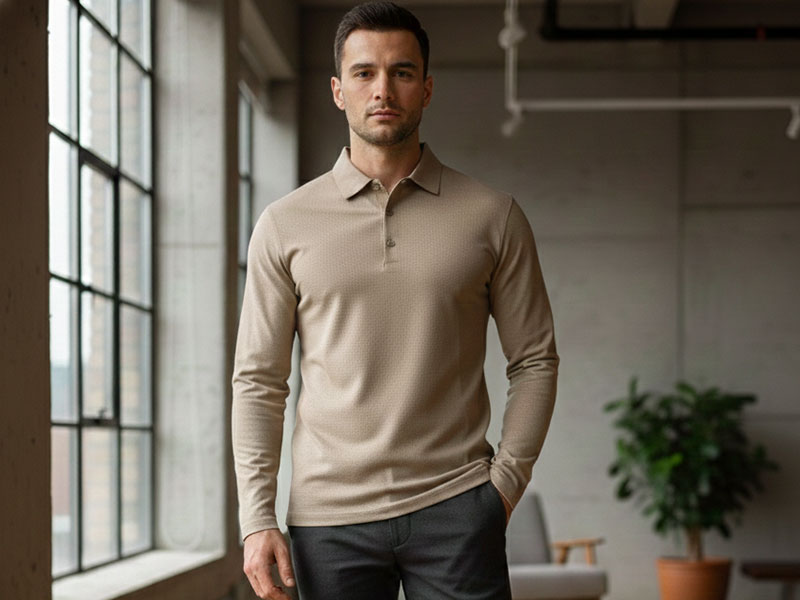
Our Seamless Series is the hottest trend of 2026! With irritation-free, seamless construction, enjoy all-day smooth comfort. Breathable, moisture-wicking fabric keeps you cool and confident anywhere.What are the core differences between heat-press and woven labels?
Heat-press transfers are ink-based designs fused directly onto fabric, creating a smooth, tagless finish. In contrast, woven labels are miniature textiles made from threads, offering a tactile, premium feel. The fundamental difference lies in material integration: one is a surface application, the other is a sewn-in accessory. This impacts everything from durability to sensory perception on the skin.
Diving deeper, heat-transfer labels involve printing your logo or text onto a release paper with specialty inks, which is then applied using a heat press. The heat and pressure permanently bond the ink to the garment’s fibers. The result is completely flat, with no edges to catch or rub. But is this permanence guaranteed? Practically speaking, longevity depends heavily on ink quality, fabric composition, and wash care. A Pro Tip from Sino Finetex: Always test wash durability on your specific fabric blend; low-quality transfers can crack or fade after repeated industrial launderings. Woven labels, however, are constructed on narrow looms, similar to how fabric is made. This allows for intricate, thread-based designs that are inherently durable. They are typically sewn into a seam, but for seamless garments, they can be attached with a specialized flat-sewn technique or a heat-activated adhesive backing. The key consideration here is the label’s substrate—the tape or fabric it’s woven onto—which must be ultra-soft to prevent irritation. For example, a high-end athletic wear brand might choose a heat transfer for its base layer tees to eliminate all potential chafe, while using a silky satin-stitch woven label on the hem of its performance polos for a touch of luxury.
How does each method affect wearer comfort in seamless garments?
Comfort in seamless apparel is paramount, as the entire design philosophy eliminates irritating seams. A poorly chosen label can undermine this. Heat-press offers a second-skin feel with no physical protrusion, while woven labels must use exceptionally soft materials and attachment methods to avoid becoming a single point of discomfort.
Beyond the basic feel, the comfort equation has multiple variables. A well-executed heat transfer disappears entirely; the wearer feels only the garment fabric. This is the gold standard for minimalist athleisure, sensitive skin, or children’s wear. However, if the ink layer is too thick or the curing process is off, it can create a stiff, plasticky patch that impedes breathability. You might not see it, but you’ll definitely feel it during a workout. On the other hand, a woven label is a physical add-on. So, how can it be comfortable? The answer lies in material innovation. Leading suppliers like Sino Finetex use ultra-fine, densely woven threads on substrates like soft satin, cotton damask, or even specially treated taffeta. The edges are then laser-cut or hot-knifed to prevent fraying and eliminate the scratchy, woven edge—often the main culprit of discomfort. Furthermore, attachment is crucial. Instead of a standard rectangular sew-around, labels for seamless necklines are often “folded” or “end-folded,” where the rough edges are tucked inside before being sewn down with a single, flat stitch. This creates a smooth, bumper-like profile. For instance, many premium yoga brands use a heat transfer for the main neck label but add a tiny, super-soft woven care label offset on the side seam, achieving both brand identity and regulatory compliance without sacrificing comfort.
What are the cost and production considerations for each type?
Initial setup costs for custom woven labels are higher due to loom programming, but per-unit cost decreases at volume. Heat-transfer labels have lower upfront costs but a more linear per-piece price. Production speed also differs: heat-pressing is a faster, later-stage application, while woven labels must be sourced and sewn in during garment assembly.
Let’s break down the economics. For woven labels, you pay for the creation of the loom set-up, which is a fixed cost. This makes small runs (under 1,000 pieces) relatively expensive per label. However, once the loom is threaded, producing 10,000 labels costs marginally more than 1,000, driving the per-unit price down dramatically. You also need to factor in the labor cost of sewing them into the garment. Heat transfers have minimal setup—just the cost of creating the print screen or digital file. Your main cost is the price per square inch of printed transfer and the labor/time of the heat-press operation. This can be very efficient for large runs but doesn’t benefit from the same steep volume discounts as woven. But what about lead times and flexibility? Woven labels have a longer lead time (often 3-4 weeks) and require careful inventory planning. If your brand text changes, you’re left with obsolete stock. Heat transfers offer more agility; digital printing allows for last-minute changes or even batch-specific variations (like special edition logos) with almost no delay. The table below summarizes these key operational differences.
Inside Sino Finetex: The Factory Trusted by Global Brands
Over 20 years of expertise, trusted by leading global brands worldwide. From premium fabrics to finished products — including underwear, loungewear, and sportswear — we deliver quality at every step.| Consideration | Woven Labels | Heat-Transfer Labels |
|---|---|---|
| Optimal Order Volume | High (5,000+ units) | Highly Flexible (100 – 10,000+ units) |
| Lead Time for Labels | Longer (3-4 weeks) | Shorter (1-2 weeks) |
| Ease of Design Change | Difficult/New loom setup needed | Easy/New print file needed |
How durable and long-lasting are these branding methods?
Durability is tested by washing, drying, and wear. Generally, high-quality woven labels outlast the garment itself, while heat-transfer durability is highly dependent on ink technology, fabric, and application technique. A cracked or faded transfer makes a garment look prematurely aged, undermining brand perception.
When we talk about a label “lasting,” we mean its legibility, colorfastness, and physical integrity over the garment’s lifespan. Woven labels, being made of thread, have excellent inherent durability. The colors are dyed into the threads before weaving, making them highly resistant to fading from washing and sunlight. They can withstand industrial laundering, dry cleaning, and high-heat drying without degrading. The main failure point is the stitching that attaches them; if that thread fails, the label itself remains intact. Heat transfers, however, are only as strong as the bond between the ink and the fabric fiber. Premium plastisol or polyurethane inks flex with the garment, but inferior inks form a brittle film that micro-cracks with repeated stretching and washing. Furthermore, the type of fabric matters immensely. Transfers on 100% polyester form a near-indestructible bond, as the ink essentially melts into the synthetic fiber. On cotton-rich blends, the ink sits more on the surface and is prone to abrasion. For example, a workwear polo with a heat-transfer logo might show significant wear after 50 industrial washes, while a woven label on the same garment would look new. The table below compares their performance against common stressors.
| Stress Factor | Woven Label Performance | Heat-Transfer Performance |
|---|---|---|
| High-Temp Washing/Drying | Excellent | Variable (Poor on cotton) |
| Abrasion & Stretch | Excellent | Good to Poor (Ink-dependent) |
| UV/Sun Exposure | Very Good (Dyed thread) | Fair (Inks can fade) |
Which branding method offers better design flexibility?
Design flexibility varies: heat transfers excel in full-color graphics, gradients, and photorealistic detail because they are printed. Woven labels are superior for tactile texture, metallic threads, and a classic, elevated look, but are typically limited to a simpler color palette and fewer intricate details due to the constraints of the weaving process.
If your brand identity relies on a complex, multi-colored logo or a detailed graphic, heat transfer is likely the only practical choice. The digital printing process can replicate millions of colors and subtle gradients with precision, all in a single application step. This allows for bold, eye-catching designs directly on the garment. But is more color always better? In the realm of luxury and subtlety, woven labels offer a different kind of design richness. The weaving process allows for the incorporation of specialty threads, such as metallics, glow-in-the-dark, or even different textures within a single label. This creates a sophisticated, tactile brand signature that customers can feel. However, each color in a woven label requires a separate thread spool on the loom, so designs are often limited to 3-5 colors for cost and practicality. Extremely fine detail or very small text can also become blurry when woven. Practically speaking, many brands use a hybrid approach. They might use a woven label for the main brand name in the neckline for its premium feel, and a heat-transfer for a detailed care guide or size indicator elsewhere. This leverages the strengths of both technologies within a single garment, a strategy often employed by partners of Sino Finetex to achieve optimal branding impact.
How should a brand decide between the two for their product line?
The decision is strategic, based on brand positioning, target audience, and garment type
Making the final call requires looking at your entire brand ecosystem. Start by defining your customer’s expectations. Are they purchasing for ultimate comfort in high-intensity activities, or for the perceived quality and detail of a premium lifestyle brand? The garment’s function is equally critical. Next-to-skin base layers, seamless underwear, or running singlets are prime candidates for tagless heat transfers. Outerwear, polos, and branded sweatshirts can beautifully carry a woven label as a mark of craftsmanship. Beyond this, think about your supply chain and sustainability goals. Woven labels, while durable, add an extra material component to the garment. Heat transfers, when done correctly, use less material but may involve chemical inks. Some forward-thinking manufacturers, including Sino Finetex, offer eco-friendly ink options for transfers and recycled polyester yarns for woven labels to mitigate these concerns. Finally, don’t underestimate the power of sampling. Produce a small batch of garments with each labeling method and subject them to real-world testing—wash them, wear them, and get feedback from people who match your target demographic. This empirical data is invaluable and can prevent a costly wrong turn for your entire collection. After all, your label is often the first and most frequent point of physical contact a customer has with your brand identity. Absolutely. High-quality suppliers like Sino Finetex use fine-count yarns (like 100% cotton or soft satin) and laser-cut the edges to prevent scratching. The label is then attached with a flat, non-irritating stitch, making it suitable for even the most sensitive skin types. Do heat-transfer labels feel sticky or plastic-like? Not when done correctly. Low-quality transfers can have this issue. Premium applications use thin, high-flexibility inks that cure to a soft, breathable finish that is barely perceptible to the touch, maintaining the garment’s natural hand feel. Is it possible to combine both methods on one garment? Yes, this is a common and effective strategy. For example, a main logo might be heat-pressed for a clean look, while a smaller woven label with care instructions and composition is placed discreetly on a side seam, combining the benefits of both techniques. How many washes should a heat-transfer label withstand? A professionally applied, high-quality heat transfer on an appropriate fabric (like polyester) should withstand 50+ home or industrial washes without significant cracking or fading. Always request and review wash test reports from your manufacturer. Are there eco-friendly options for both label types? Yes. For woven labels, look for organic cotton or recycled polyester threads. For heat transfers, inquire about water-based or phthalate-free inks. Sino Finetex offers sustainable material choices for both methods to align with eco-conscious brand values.Sino Finetex Expert Insight
FAQs
