
Jacquard knit logos represent the pinnacle of in-fabric branding, where intricate designs are programmed directly into the knitting machine’s pattern. This creates a seamless, durable, and high-definition logo that is part of the garment’s very structure, offering superior comfort and a premium look compared to traditional appliqués or prints.
Which Custom Branding Method Works Best for Private Label Seamless Tees?
What Makes the 2026 Seamless Polo & T-Shirt Series a Best-Seller?
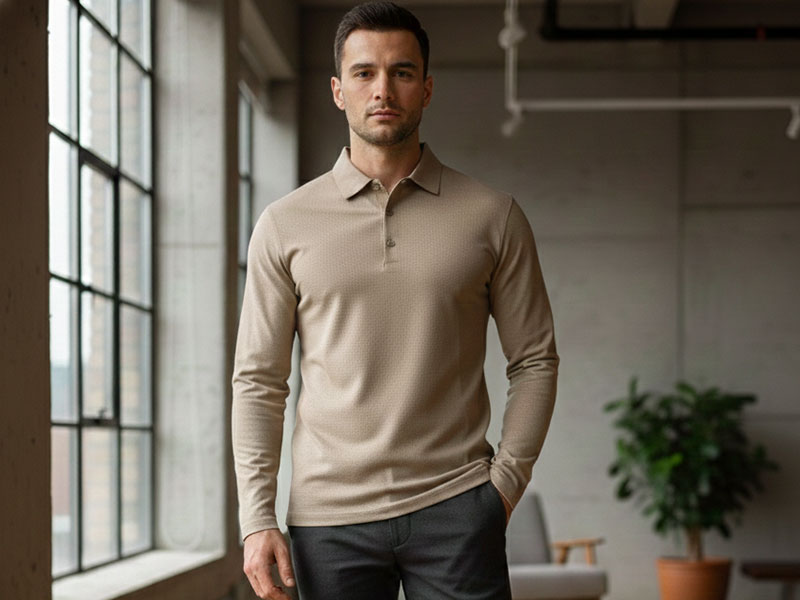
Our Seamless Series is the hottest trend of 2026! With irritation-free, seamless construction, enjoy all-day smooth comfort. Breathable, moisture-wicking fabric keeps you cool and confident anywhere.What is Jacquard Knit Logo Technology?
Jacquard knit logo technology uses computerized knitting machines to integrally knit a logo directly into the fabric during production. By controlling individual needles with a digital pattern file, it creates a multi-color, textured design that is seamless and permanent, eliminating the need for post-production embellishments.
At its core, Jacquard technology is about precision control. The process begins with a high-resolution digital image of your logo, which is then converted into a specialized knitting language file. This file acts as a blueprint, instructing the machine’s needles on when to knit, tuck, or miss a stitch using different colored yarns. The result is a logo that isn’t layered on top but is woven into the very identity of the fabric. This integral construction means the logo won’t peel, crack, or fade with washing, as it experiences the same mechanical stresses as the surrounding material. But how does this complex instruction set translate into a physical garment? The machine reads the program row by row, with hundreds of needles working in concert to build the design from the bottom up. This allows for remarkable detail and color blending, creating gradients and fine lines that are impossible with traditional screen printing. For brands seeking a premium, long-lasting identity marker, this technology is unmatched. A partner like Sino Finetex leverages this technology to deliver branding that feels as good as it looks, ensuring the logo enhances the garment’s performance and aesthetics.
How are logos programmed into the knitting machine?
Logo programming transforms a graphic into machine instructions via a multi-step digitization process. Specialized software converts the design into a stitch map and yarn carrier sequence, defining every needle’s action for each row to build the integrated logo accurately.
The journey from a digital logo to a knit-in brand mark is a fascinating blend of art and engineering. It starts with artwork preparation, where a clean, vector-based logo is essential. This file is then imported into knitting CAD software, where a technician “paints” the design onto a digital representation of the knit structure. This step assigns colors and determines how stitches will form the image. The software then generates the machine code, which is a highly detailed set of commands dictating the movement of each needle, the selection of yarn carriers, and the tension settings. Think of it as the difference between painting on a canvas and weaving the painting into the canvas itself—the image becomes part of the foundation. This code is loaded into the computerized knitting machine, which executes it with precision. The machine reads the program line by line, with the carriage moving back and forth, placing stitches exactly as programmed. For complex multi-color logos, the machine may use intarsia or jersey plating techniques to carry different yarns across the back of the fabric without floating, ensuring a clean reverse side. This meticulous programming is why experienced manufacturers are crucial; a slight miscalculation in the stitch map can distort the entire design.
| Programming Aspect | Traditional Screen Print/Embroidery | Jacquard Knit-In Logo |
|---|---|---|
| Design Integration | Applied post-knit; a separate layer | Integral to fabric structure; seamless |
| File Preparation | Color separations for screens | Stitch-by-stitch digitization & knitting code |
| Production Flexibility | Easy to change between batches | Fixed per garment; changes require reprogramming machine |
What are the key advantages over traditional branding methods?
Jacquard knit logos offer unmatched durability and a seamless, second-skin feel. Unlike prints or patches, they resist cracking and peeling through countless washes and provide superior comfort with no added layers, making them ideal for activewear and base layers.
Beyond the obvious aesthetic upgrade, the functional benefits are substantial. Firstly, the durability is exceptional. Because the logo is knit in, not on, it experiences wear identically to the rest of the garment. This means no more cracked vinyl after a year of gym sessions or frayed embroidery threads on a well-worn polo. The color is also locked into the yarn itself, so fading is drastically reduced compared to surface dyes. Secondly, and crucially for performance wear, is the comfort factor. There is no stiff backing, raised edge, or plastic-like layer to chafe against the skin. The branding is flat, flexible, and breathable. This seamless integration is why high-end athletic brands favor this method—it doesn’t interfere with moisture-wicking or freedom of movement. Furthermore, it allows for branding on areas that are sensitive to irritation, like the nape of the neck or the side seam. From a sustainability perspective, it’s also a cleaner process, eliminating the need for glues, solvents, or extra layers of material. So, while the initial setup is more involved, the long-term value in product longevity and customer satisfaction is clear. A manufacturer with deep expertise, like Sino Finetex, understands how to balance these advantages with efficient production.
Inside Sino Finetex: The Factory Trusted by Global Brands
Over 20 years of expertise, trusted by leading global brands worldwide. From premium fabrics to finished products — including underwear, loungewear, and sportswear — we deliver quality at every step.
What are the limitations or design constraints?
Primary constraints include color count limitations per machine head, requirements for simplified, high-contrast artwork, and significant minimum order quantities (MOQs). Fine details and photorealistic images often do not translate well into the stitch-based medium.
While powerful, Jacquard knitting isn’t a free-for-all. The technology imposes specific design rules. Color is a major constraint; a standard machine may only accommodate 3-4 yarn carriers in a single pass, limiting the palette. While techniques like intarsia can incorporate more, they increase complexity and cost. The design itself must be “knittable.” Extremely fine lines, tiny text, or subtle gradients can get lost or become blurry when rendered in stitches. Artwork needs clear, defined edges and strong contrast to read well. Practically speaking, this often means simplifying a logo’s most intricate elements. Another significant consideration is the production scale. Creating the digital program and setting up the machine is time-intensive and costly. Therefore, this method is typically not economical for very small batches or one-off prototypes; it shines in larger production runs where the setup cost is amortized. The design is also fixed—you can’t easily change the logo’s color or placement between small batches without a full machine reprogram. So, is it worth it? For established brand marks on core products produced at scale, absolutely. It requires upfront investment in perfecting the digital file, but the payoff is a definitive, premium product feature.
Which garments are best suited for knit-in logos?
This technology excels on seamless activewear, technical base layers, and premium knitwear like polos and sweaters. Any garment where comfort, stretch recovery, and durability are paramount benefits from the seamless, integrated nature of Jacquard branding.
The ideal candidates for knit-in logos are garments where the branding should be felt as little as seen. Seamless activewear, such as high-performance leggings, sports bras, and athletic tops, is a perfect match. In these applications, any external tag or rough patch is a potential source of chafing during intense movement. A knit-in logo eliminates this entirely. Similarly, technical base layers for skiing, hiking, or cycling benefit enormously, as the flat branding doesn’t trap moisture or create cold spots. Beyond sportswear, premium casual knitwear like polo shirts, sweaters, and even some types of socks are excellent candidates. For a polo shirt, a knit-in logo on the chest provides a clean, sophisticated look that maintains the fabric’s drape and breathability—a hallmark of quality that discerning brands and consumers appreciate. It’s also increasingly popular in corporate wear and uniforms, where a professional appearance needs to withstand industrial laundering. The common thread? These are garments where the wearer’s experience and the product’s longevity are critical selling points. By integrating the brand seamlessly, you enhance both.
| Garment Type | Why It’s Suited | Branding Benefit |
|---|---|---|
| Seamless Activewear | Eliminates chafing; maintains stretch & moisture-wicking | Durable branding that survives intense workouts and washes |
| Premium Polo Shirts | Preserves fabric drape and breathability | Clean, upscale aesthetic without stiffness of an embroidered patch |
| Technical Base Layers | No raised edges to cause irritation under other layers | Subtle, comfortable branding that doesn’t compromise function |
How does the process impact cost and lead time?
Knit-in logos incur higher initial setup costs and longer pre-production lead times due to the complex digitization and machine programming. However, for large orders, the per-unit cost becomes competitive, as it eliminates separate printing/embroidery steps and reduces labor post-knitting.
The cost structure for Jacquard logos is fundamentally different from applied methods. The major investment is upfront: you pay for the skilled digitization work, the creation of the machine program, and potentially the setup of the knitting machine itself. This can make sample development more expensive. The lead time to get a first sample right is also longer, as it may take a few iterations to perfect the stitch map and color placement. But here’s the turning point: once the machine is programmed and running, the logo is created simultaneously with the garment. This eliminates the need for a separate, secondary production station for printing or sewing on patches. In mass production, this integration creates efficiencies that can offset the high setup cost. So, for a run of 50 pieces, it’s prohibitively expensive. For a run of 5,000, the per-unit cost can be very favorable, and you gain all the durability and comfort benefits. Furthermore, it streamlines the supply chain—fewer production steps mean less handling and a reduced risk of errors or delays. Partnering with an experienced supplier like Sino Finetex, which controls the process from yarn to finished garment, is key to navigating these economies of scale effectively.
Sino Finetex Expert Insight
FAQs
Not all logos translate perfectly. Highly detailed, photorealistic, or gradient-heavy designs often need simplification. Vector-based logos with clear shapes and limited colors yield the best, crispiest results when digitized for knitting.
How does wash durability compare to screen printing?
Jacquard knit logos are significantly more durable. Since the color is in the yarn, it won’t crack or fade like plastisol prints. The logo withstands countless industrial washes without degradation, as it’s part of the fabric itself.
What are the typical Minimum Order Quantities (MOQs) for this technique?
MOQs are higher due to setup costs, often starting in the hundreds or thousands of pieces per style/color. It’s designed for production-scale branding, not small-batch or sample-level orders where traditional methods are more economical.
Does Sino Finetex offer support with logo digitization?
Yes, absolutely. Our dedicated R&D and technical team provides end-to-end support, from advising on design optimization to performing the precise digitization and programming required for flawless execution on our advanced knitting machines.
