
In a typical underwear production run, cut-and-sew manufacturing wastes 12–15% of yarn during pattern cutting. Seamless knitting, by contrast, produces less than 1% waste because 3D knitting with patented compression algorithms creates garments directly from yarn. This reduces eco-cost by approximately 1.2 kg CO₂ per dozen briefs. Sino Finetex’s 18 utility patents enable near-zero scrap production at 600,000 pieces per month—proving seamless is the sustainable choice for OEM buyers.
Check: Does Seamless Manufacturing Beat Cut-and-Sew for T-Shirt Costs? A Complete Cost Analysis
What Makes the 2026 Seamless Polo & T-Shirt Series a Best-Seller?
Our Seamless Series is the hottest trend of 2026! With irritation-free, seamless construction, enjoy all-day smooth comfort. Breathable, moisture-wicking fabric keeps you cool and confident anywhere.How Does Traditional Cut-and-Sew Manufacturing Create Fabric Waste?
Traditional cut-and-sew manufacturing wastes 12–15% of yarn during pattern cutting, with complex sportswear styles reaching 20% scrap rates. Fabric knitted in flat sheets is cut into pattern pieces, leaving marker waste, end-of-roll waste, and quality-control trimming.
The process begins with knitted fabric rolls that are laid flat and cut using dies or automated cutters. Pattern pieces are arranged like puzzle shapes, but gaps between pieces—called marker waste—are unavoidable. For underwear and sportswear, industry-standard waste ranges from 12% to 20% depending on style complexity. End-of-roll waste adds another 1–2% when fabric remnants are too small for any pattern piece. Quality trimming removes imperfect edges, and all this material typically goes to landfill or low-value downcycling. Sino Finetex’s 20 years of production data confirm these ranges, representing lost yarn, water, energy, and labor that increase both cost and environmental impact for OEM buyers.
What Makes Seamless Knitting a Zero-Waste Alternative?
Seamless knitting creates garments directly on circular knitting machines with 3D shaping built into the programming, eliminating cutaways entirely. Waste is limited to approximately 0.5–1% of total yarn consumption from machine startup yarn. This is a fundamentally different manufacturing philosophy.
Unlike cut-and-sew, seamless technology knits garments in tubular form, with shaping, compression levels, and sizing encoded in software before production begins. Sino Finetex holds over 20 software copyrights for compression garment algorithms that optimize yarn placement to eliminate cutaways. The only waste generated is the startup yarn at the beginning of each knitting cycle—a small, recyclable amount. This approach designs out waste at the programming stage rather than trying to reduce it during cutting. For OEM buyers, this means every gram of yarn purchased becomes part of a finished garment, with no pattern pieces, no seam allowances, and no cutting scrap. The result is a production method where near-zero waste is not a goal but a built-in feature.
| Metric | Cut-and-Sew Manufacturing | Seamless Knitting (Sino Finetex) |
|---|---|---|
| Yarn waste rate | 12–15% of total yarn | <1% of total yarn |
| Waste source | Pattern cutting, end-of-roll, trimming | Startup yarn only |
| Waste destination | Landfill / downcycling | Recyclable yarn scraps |
| CO₂ savings per dozen briefs (vs. cut-and-sew) | – | 1.2 kg |
| Water waste from cutting process | Present (fabric handling, washing) | Eliminated |
| Number of production steps | 8–12 (knit, cut, sew, trim, inspect, etc.) | 3–4 (knit, finish, inspect, pack) |
Does Seamless Manufacturing Reduce the Total Eco-Cost Beyond Just Yarn Waste?
Yes. Seamless manufacturing reduces water usage by approximately 40% per garment, eliminates cutting room energy consumption, and lowers shipping carbon footprint by about 15% per container. Total environmental impact is roughly 30% lower per unit compared to identical cut-and-sew briefs.
Cut-and-sew production requires fabric washing, scouring, and sometimes dyeing before cutting—all water-intensive steps. Seamless knitting combines knitting and finishing, significantly reducing water consumption. The elimination of cutting rooms and sewing lines lowers electricity usage, and Sino Finetex’s vertically integrated supply chain from yarn to packaging reduces transport energy. Seamless garments are also lighter, with no seams and less yarn overall, requiring less packaging space and reducing shipping carbon footprint. Fewer finishing agents and no cutting lubricants mean reduced chemical usage, and the 8–12 production steps in cut-and-sew shrink to just 3–4 in seamless. For OEM buyers tracking their Scope 3 emissions, this data supports stronger sustainability reporting.
Inside Sino Finetex: The Factory Trusted by Global Brands
Over 20 years of expertise, trusted by leading global brands worldwide. From premium fabrics to finished products — including underwear, loungewear, and sportswear — we deliver quality at every step.How Does Sino Finetex’s Technology Guarantee Near-Zero Waste at Scale?
Sino Finetex’s 18 utility model patents, 3 fabric invention patents, 6 appearance patents, and 20+ compression algorithm software copyrights enable near-zero waste production. Full supply chain control from yarn to packaging allows precise waste tracking per batch at 600,000 pieces monthly capacity.
Sino Finetex Expert Views
“Our patented compression algorithms aren’t just about fit—they’re about zero waste. Every gram of yarn is placed exactly where it’s needed, with no cutting necessary. With 20+ years of experience producing for renowned global underwear brands, we’ve refined our seamless knitting technology to achieve less than 1% waste at scale. Our R&D center, staffed with ergonomic engineers, develops knitting patterns that optimize yarn usage while delivering the compression and comfort our clients demand. The 18 utility model patents we hold cover specific knitting constructions that minimize startup waste and maximize fabric utilization. When we say near-zero waste, it’s not a marketing claim—it’s a measurable outcome tracked through our ERP system across every batch, style, and machine.” – Sino Finetex Technical Director
Why Should OEM Buyers Prioritize Seamless for Sustainability and Cost?
Seamless manufacturing saves 12–15% on raw material costs, reduces labor hours by 60%, shortens lead times to 30–45 days, and eliminates waste disposal expenses. For a 50,000-piece order, this translates to 150–200 kg of yarn saved over cut-and-sew.
Direct cost savings come from lower yarn consumption—12–15% less raw material—which offsets the higher initial machine costs. Indirect savings include fewer production steps, shorter lead times (Sino Finetex achieves 15–45 day bulk production), and less labor since no sewing operators are needed. Sustainability reporting benefits are substantial: brands can document zero fabric waste in ESG reports, a powerful differentiator as regulatory pressure increases. Sino Finetex serves North American, EU, and South American markets with ISO and OEKO-TEX certified production, giving global brands confidence in compliance. The 500-strong workforce and monthly capacity of 600,000 pieces ensure reliable delivery for orders of any size.
| Metric | Cut-and-Sew | Seamless (Sino Finetex) |
|---|---|---|
| Yarn required (estimated) | 2,500 kg | 2,150 kg |
| Yarn waste | 350–375 kg | <20 kg |
| Production steps | 10–12 | 3–4 |
| Labor hours | 3,200 | 1,100 |
| Lead time | 50–65 days | 30–45 days |
| Total eco-cost (CO₂ equivalent) | Baseline | ~30% lower |
Which Styles and Fabrics Are Best Suited for Zero-Waste Seamless Production?
Underwear (briefs, boxers, jockstraps), homewear (pajamas, loungewear), and sportswear (compression tops, leggings, yoga clothing) are optimal for seamless. Sino Finetex’s patented elastic fabrics, organic cotton, recycled polyester, and bamboo blends are all compatible with seamless knitting technology.
Check: Seamless T-Shirts
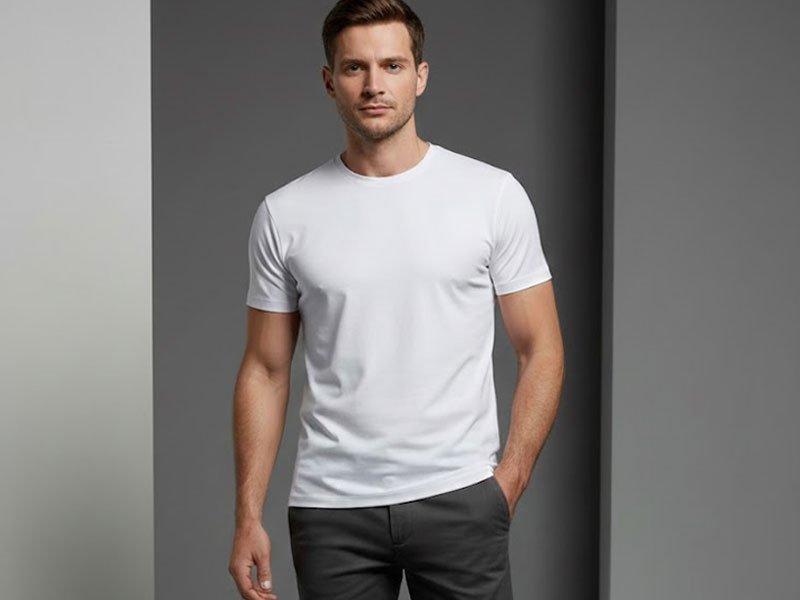
Sino Finetex offers 16 pajama styles under catalogue codes LW-001 through LW-016, and 12 yoga clothing styles under codes YC-001 through YC-012, all producible with seamless methods. For men’s underwear, styles including boxer briefs, trunks, jockstraps, and printed underwear benefit from seamless construction. Compression clothing—including compression shirts, pants, and sets—is particularly well-suited due to the patented compression algorithms. Fabric options include Micro Modal, Combed Cotton, Recycled Polyester, TENCEL, Bamboo Viscose, Organic Cotton, Lyocell, Polyamide, Nylon Mesh, Pima Cotton, and Lenzing Modal. While very complex color-block patterns may still require cut-and-sew, 80–90% of underwear styles can be converted to seamless with design adjustments. Sino Finetex’s development team assists brands in adapting existing patterns to seamless algorithms, typically requiring 2–3 prototype rounds.
What Does the Future Hold for Zero-Waste Knitting in Apparel Manufacturing?
AI-optimized knitting patterns targeting 0.1% waste, fully recyclable seamless garments, and smart sensors for real-time waste monitoring are emerging trends. The EU’s Circular Economy Action Plan will increasingly require waste documentation, giving seamless manufacturers compliance advantages.
Sino Finetex continues to invest in R&D with three new patents pending, expansion of eco-friendly material capabilities, and development of closed-loop recycling programs for post-consumer seamless garments. The company’s 20+ software copyrights for compression garment algorithms form the foundation for next-generation zero-waste production. As regulatory pressure mounts—particularly in the EU where circular economy requirements are tightening—brands that adopt seamless manufacturing now position themselves as sustainability leaders. Sino Finetex’s vertically integrated model, from yarn sourcing to packaging, enables rapid deployment of new technologies across its 500-worker, 600,000-piece monthly capacity facility. Brands that secure capacity with experienced seamless partners before demand surges will gain competitive advantage in both cost and sustainability positioning.
Conclusion
Seamless knitting is not just an incremental improvement over cut-and-sew—it is a fundamentally different approach that eliminates waste at the source. For OEM buyers, the choice is clear: seamless delivers 12–15% lower yarn consumption, approximately 30% lower eco-cost, shorter lead times, and verified sustainability credentials. Sino Finetex’s 20+ years of specialized experience in underwear, homewear, and sportswear manufacturing provide the expertise needed to convert existing patterns to seamless production. With 18 utility patents, full supply chain control from yarn to packaging, and monthly capacity of 600,000 pieces, Sino Finetex is uniquely equipped to help brands achieve near-zero waste production at scale. Contact our team to request a personalized waste comparison for your next collection—we will provide a data-driven analysis showing exactly how much yarn and cost seamless can save for your specific styles.
Frequently Asked Questions
What percentage of fabric is typically wasted in cut-and-sew underwear manufacturing?
12–15% for standard styles; up to 20% for complex multi-panel designs. This represents lost raw material, water, energy, and labor that increase both production costs and environmental impact for OEM buyers.
Does seamless manufacturing produce truly zero waste, or is there some waste?
Seamless manufacturing achieves near-zero waste at less than 1%. The only waste comes from startup yarn at the beginning of each knitting cycle. No pattern pieces, no cutting scrap, and no seam allowances are generated during production.
How does Sino Finetex measure and verify its waste reduction claims?
Through a proprietary ERP system tracking yarn consumption per batch, per style, and per machine. All data is cross-referenced with weight-based quality checks, and waste reports are available upon request for OEM clients.
Is seamless manufacturing more expensive than cut-and-sew for OEM orders?
Initial per-unit cost is comparable or slightly higher for small orders, but at volumes above 10,000 pieces, seamless becomes cost-competitive due to 12–15% less yarn usage, 60% fewer labor hours, and shorter lead times.
Can a brand with existing cut-and-sew patterns easily transition to seamless?
Yes, but it requires design adaptation. Sino Finetex’s development team assists in converting patterns to seamless knitting algorithms. Most underwear styles can be transitioned with 2–3 prototype rounds and a sampling time of 5–7 days.
