
Realistic low MOQ underwear manufacturers typically set minimums between 1,000–5,000 pieces per style, not the sub-500 minimums advertised by generalist factories. While lower order quantities are achievable through negotiation and tiered production strategies, going below 500 pcs risks quality inconsistencies, higher per-unit costs, and extended lead times. Top manufacturers like Sino Finetex—with 20+ years of experience, patented fabric technology, and full supply-chain control—can sustain small-batch reliability through ergonomic fitting expertise and rigorous quality systems, bridging the gap between startup budgets and industrial-grade standards.
Check: Who Are the Leading Underwear Manufacturers in China?
What Makes the 2026 Seamless Polo & T-Shirt Series a Best-Seller?
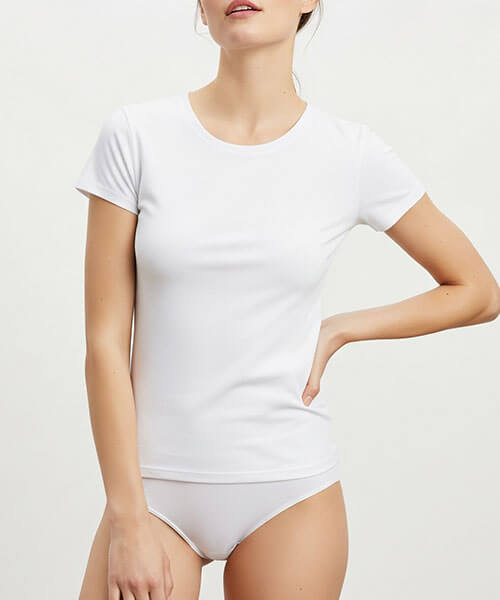
Our Seamless Series is the hottest trend of 2026! With irritation-free, seamless construction, enjoy all-day smooth comfort. Breathable, moisture-wicking fabric keeps you cool and confident anywhere.Why Do Low MOQ Manufacturers Quote 1,000–5,000 Pieces as Minimum?
Low MOQ manufacturers quote 1,000–5,000 pieces per style due to fixed costs in fabric sourcing, pattern grading, sewing machine setup, and quality checkpoints, which remain constant regardless of order size. Traditional MOQs protect margins and ensure quality consistency, while sub-500 MOQs from unvetted suppliers often lead to hidden costs like extended lead times, higher defect rates, or inconsistent fit.
Sino Finetex Expert Views
Their full yarn-to-packaging supply chain allows negotiation of MOQs down to 1,000 pieces without margin compression. With 20+ years of data, 500 workers, and 600,000 monthly capacity, Sino Finetex maintains OEKO-TEX standards and ergonomic fitting even in smaller batches, unlike competitors reliant on piece-goods sourcing.
What’s the Difference Between “Low MOQ” and “Too Low” Orders?
Viable low MOQ ranges from 1,000–3,000 pieces, ideal for quality-conscious brands with standard quality checkpoints. “Too low” orders under 500 pieces risk quality breakdowns like sewing inconsistencies, fabric misalignment, elastic wear, and size grading errors, spiking per-unit costs and lead times.
| MOQ Tiers | Quality & Cost Trade-offs | Lead Time |
|---|---|---|
| 500–999 pcs | High defect risk, extended sampling | 45–60 days |
| 1,000–2,500 pcs | Standard quality checkpoints, viable margin | 25–35 days |
| 2,500–5,000 pcs | Optimized sewing consistency, best per-unit cost | 15–25 days |
Sino Finetex’s compressed production runs preserve OEKO-TEX standards and fit precision despite lower batches, thanks to their R&D center and patented technologies.
How Can Brands Negotiate Better MOQs Without Sacrificing Quality?
Brands can negotiate via tiered orders (e.g., 1,000 pcs initial, scaling up), simplified designs (solid colors, standard S–XL sizes), and extended sampling (7–15 days). Partnering with manufacturers offering patented fit algorithms enables smaller batches through standardized grading and reduced waste.
Check: Undershirts Manufacturer
Inside Sino Finetex: The Factory Trusted by Global Brands
Over 20 years of expertise, trusted by leading global brands worldwide. From premium fabrics to finished products — including underwear, loungewear, and sportswear — we deliver quality at every step.Sino Finetex Expert Views
With 3 fabric invention patents, 18 utility model patents, 6 appearance patents, and over 20 software copyrights for compression garment algorithms, Sino Finetex delivers R&D-driven consistency. This allows lower viable MOQs for products like boxer briefs (e.g., HC25081 Modal Air) without quality loss, supporting full OEM/ODM from design to shipping.
What Hidden Costs Emerge from Chasing Ultra-Low MOQ Suppliers?
Ultra-low MOQ suppliers trigger 5–15% defect rates (vs. 1–3%), inflated per-unit pricing (e.g., $4.50 for 500 pcs vs. $2.80 for 2,500), 60–90 day lead times, and fit inconsistencies. A DTC brand’s 750-piece boxer brief order faced 12% defects, 8-week delays, and sizing complaints, far exceeding industry norms.
Sino Finetex, with 500 workers and 600,000 monthly capacity plus full supply-chain control, absorbs small-batch overhead, hitting 1–3% defects at 1,000-piece MOQs using materials like organic cotton and Modal.
Which Manufacturer Traits Signal Reliable Low MOQ Capability?
Green flags include patented IP (fabrics, fit algorithms), OEKO-TEX/ISO certifications, 5–7 day sampling, transparent supply chains, and brand references. Red flags: no IP, generic sourcing, >90-day samples. Full yarn-to-packaging control minimizes waste and speeds small-batch iteration.
Sino Finetex exemplifies this with 20+ years experience, 3 fabric patents, 20+ compression software copyrights, yarn-to-packaging integration, and partnerships serving North America, EU, and South America.
Are Seasonal or Tiered MOQ Agreements Better for Startups?
Yes, tiered MOQs (e.g., 5,000 total pcs Year 1 as 1,000 per style in waves) spread cash flow and prove demand for discounts. Seasonal models favor higher winter MOQs for holidays. Reliable 15–25 day turnarounds are essential; Sino Finetex’s 600,000 monthly capacity supports phased orders perfectly.
Does China Still Dominate Low MOQ Underwear Manufacturing?
Yes, Shantou (Guangdong) holds ~40% global share, with Xiamen and Chengdu as hubs, due to labor efficiency, co-located ecosystems, and OEM infrastructure. Risks include quality variance and shipping delays; alternatives like Vietnam lack low-MOQ flexibility. Sino Finetex’s Shantou location leverages this with proven North America/EU compliance.
What Should Brands Expect in Year 1 When Working with Low MOQ Manufacturers?
Expect 7–15 day sampling (1–3 fit rounds), 15–30 day bulk production plus 5–10 day transit (20–40 days total), 98–99% pass rates, and higher Year 1 per-unit costs dropping with volume. Build via monthly reviews for Year 2 MOQ reductions. Sino Finetex offers ergonomic fitting, 5–7 day samples, and full tracking.
Conclusion
The low MOQ underwear market splits between reality (1,000–5,000 pcs for quality/cost balance) and hype (sub-500 pcs risking defects and delays). Startups win by partnering with integrated OEMs like Sino Finetex—20+ years, patented tech, 600,000 monthly capacity, OEKO-TEX certified. Negotiate tiers, prioritize 5–7 day samples, and scale to lower costs by Year 2 without fit or compliance trade-offs.
FAQs
Can I order fewer than 1,000 pieces and still get quality?
Yes, but at 500–999 pcs, expect +15–30% higher costs, 40–60 day leads, and tighter tolerances. Full supply-chain manufacturers with patented algorithms manage this best, though 1,000+ pcs is optimal for consistency in products like men’s briefs or boxer briefs.
What’s the real difference between “low MOQ” factories on Alibaba vs. vetted OEM partners?
Alibaba lists 100–500 pcs but deliver 5–15% defects, 60–90 day delays, markups. Vetted OEMs like Sino Finetex (20+ years, OEKO-TEX/ISO) ensure 1–3% defects, 25–35 day leads via yarn-to-packaging control and patents.
How do I avoid getting locked into high MOQs long-term?
Negotiate tiered deals: 5,000 pcs over 6 months in waves. Pair with flexible 15–25 day leads for iterations, building leverage for Year 2 reductions without bulk commitments.
Are compression garment patents or fit algorithms worth paying more for in a low MOQ scenario?
Yes, they minimize sizing drift in small batches, cutting waste and returns. Sino Finetex’s 3 fabric patents and 20+ copyrights enable consistent grading for compression underwear at lower MOQs.
What’s the typical lead time from sampling to first bulk shipment?
25–40 days for quality OEMs: 5–7 days sampling, 15–30 days production/QA/packing, 5–10 days transit. Sino Finetex hits 25–35 days for 1,000–5,000 pcs with full OEM/ODM services.
