
Illustrative situation
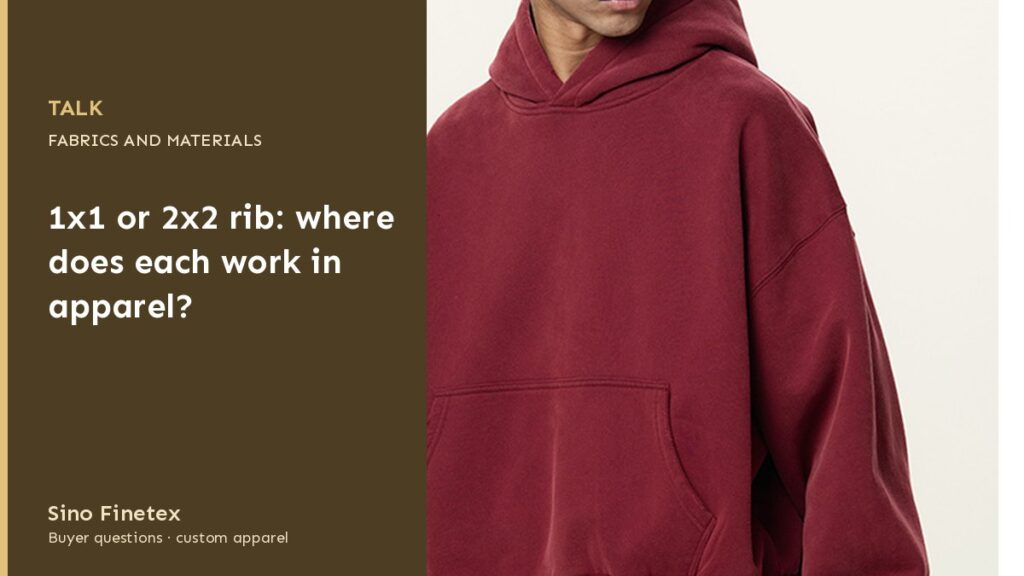
A hoodie sample has cuffs in a fine rib that stretch out after a few wears. The factory offers a 2x2 rib for the cuffs and hem, and the brand wants to know when each rib suits and how to approve it.
Main answer
A 1x1 rib alternates single knit and purl columns and looks fine and flat, while a 2x2 rib uses two knit columns then two purl columns, stretches more and looks bolder. Choose by the stretch and recovery you need, the look you want and the part of the garment, and test the finished rib after washing. The rib is small but it is the part customers touch and stretch most.
What the ribs are
Rib knit has vertical columns, called wales, of knit stitches alternating with purl columns. In 1x1 rib the columns alternate one by one, giving a fine, tight look. In 2x2 rib they alternate two by two, which makes deeper grooves and more visible texture. Ribs stretch widthways and pull back.
Where each is used
1x1 rib is common in neckbands and cuffs of fine T-shirts and underwear waistbands, where a neat, flat look is wanted. 2x2 rib is common in hoodie cuffs and hems, sweater bands and sportswear, where a stronger stretch, a bolder texture and a snug hold are wanted. Both can contain elastane.
Recovery and fit
Ribs hold garments at the cuffs and hems through stretch and recovery. Elastane improves recovery. A rib that is too loose causes cuffs to stretch out, and one that is too tight is uncomfortable. ASTM D2594 describes tension testing of low-power stretch knit fabrics, which is relevant to checking rib stretch.
Matching rib and body
The rib should be a little tighter than the body so it holds, but not so tight it distorts the cuff. Check how the rib joins the body fabric, because a mismatch in weight or colour is a common sample complaint. Approve the cuff width as well as the rib type.
Choosing and approving
Pick the rib by the garment’s style and the stretch needed, and specify gsm, composition, elastane share and the rib width. Approve a wash-tested sample and check cuffs after wearing. Check that colour matches the body fabric. See hoodie fabric and construction and T-shirt fit.
Fact, recommendation, uncertainty
- Established fact
- ASTM D2594 covers tension testing of low-power stretch knit fabrics, which includes checking rib stretch.
- Recommendation
- Use 1x1 for fine, flat bands and 2x2 for bolder, stretchier cuffs and hems, and specify composition and elastane share.
- Uncertainty
- Behaviour depends on yarn, gauge and elastane, not only on the rib name.
Sources and further reading
Sources checked on 24 October 2026. Standards bodies sell the full texts; we cite what their public pages state. General information, not legal or technical certification advice.
More perspectives from the team
Three further views on the same question, each by function. They add conditions and limits to the main answer; they are editorial notes, not customer reviews.
Sino Finetex Editorial Team Sourcing
Ask for the rib spec, gsm and elastane share in the quotation. Limit: ribs from a different mill can differ in colour. Ask for the rib’s elastane share and recovery on its own, not only the body fabric’s.
Sino Finetex Editorial Team Product selection
Use 2x2 for chunkier looks and 1x1 for refined ones. Limit: it changes the style, so approve it on a sample. Use a taller cuff on heavy fleece, so the rib can balance the weight.
Sino Finetex Editorial Team Quality & care
Stretch cuffs repeatedly and wash them, then check recovery. Limit: use the same pull each time. Compare cuffs after washing against the approved sample for width and shape. Keep the approved rib sample sealed for comparison with bulk.
Related products
- M8303 350GSM Fleece Pullover Hoodie
Sino Finetex product page
- M8312 410GSM Half-Zip French Terry Hoodie
Sino Finetex product page
- Undershirts Manufacturer
Sino Finetex product page
- Tank Tops Manufacturer
Sino Finetex product page
Related articles and topics
- TalkHow do I specify hoodie cuffs and hem rib so they keep their stretch?
- TalkWhy does a T-shirt neckline stretch out, and how can it be prevented?
- TalkHow do I measure a hoodie for a size chart?
- TalkHow does moisture-wicking fabric work, and where are its limits?
- Hoodie Quality Control: Inspection Points for Fleece Garments
- Crewneck Sweatshirt Manufacturer: Necklines, Ribbing and Retail Standards
- Top 10 T-Shirt Decoration Methods Ranked by Durability
- How Are Logos Knitted Seamlessly With Jacquard Technology?
- Fit and Stretch in Seamless Garments: Working With Four-Way Stretch
- How can the500-wash test ensure stretch recovery in shirts?